Healthy, Quarantined Saltwater Fish for Sarasota Reefers
Clownfish, tangs, wrasses, gobies and marine invertebrates. Every fish quarantined two weeks before sale.
From $25 · per fish
2 weeks
Quarantine on every fish
Free
In-store water testing
Honest
Stocking advice, no upsell
Walk-in
Mon-Sat 10-6, Sun 12-5
Have you ever stared at a stunning reef tank in an office and wondered if you could recreate that magic? I certainly have.
Keeping saltwater fish brings a vibrant, calming slice of the ocean right into your home or business.
We are going to walk you through exactly how to set up a thriving tank without the common headaches.
A specialty saltwater shop, not a chain pet store
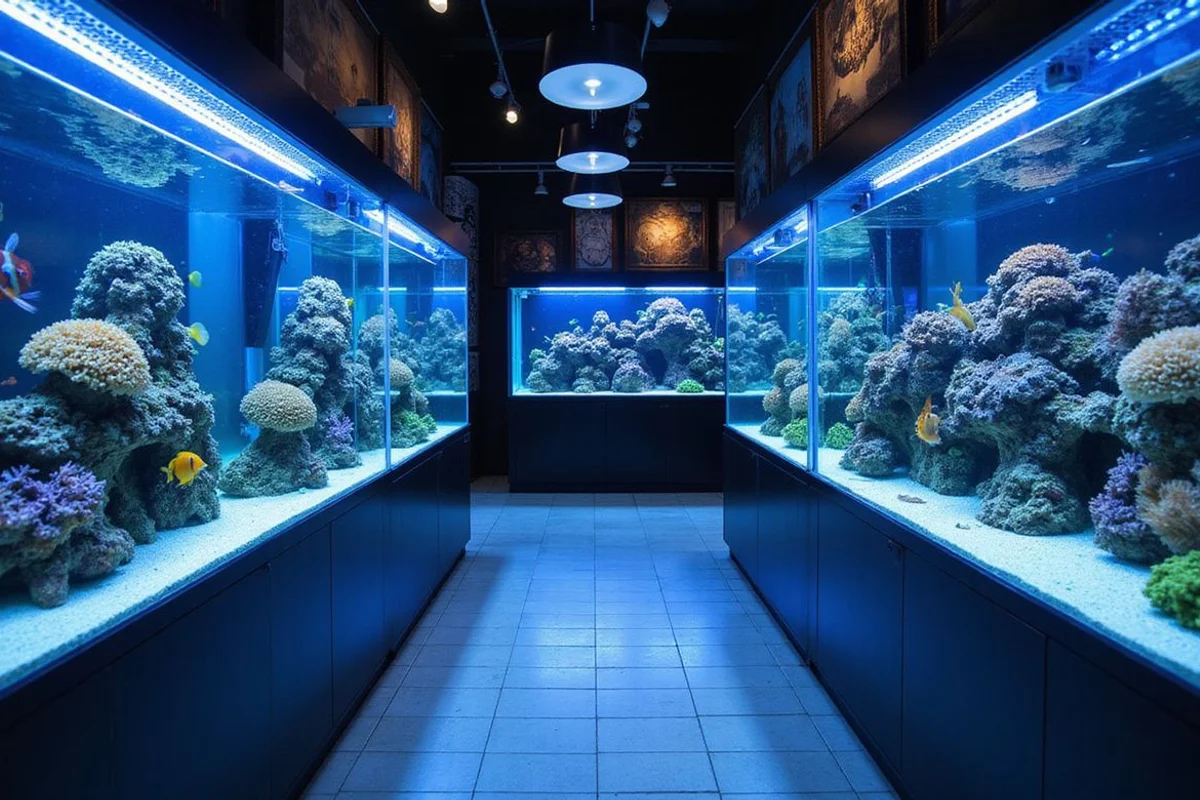
The saltwater room at Gulf Coast Aquatics is a completely separate space inside the building. This isolation features its own dedicated filtration loop, high-end reef-spec lighting, and a strict quarantine system in the back.
That physical separation is crucial for long-term success. Marine livestock requires highly specific conditions, distinct lighting tolerances, and offers a much narrower margin for stress compared to freshwater species.
We maintain our holding tanks at steady levels to perfectly match what you are likely running at home:
- Specific Gravity: Strictly held at 1.025 to replicate natural seawater.
- Temperature: A steady 78 degrees Fahrenheit to prevent thermal shock.
- Lighting: Acclimated under schedule-controlled LEDs to prevent coral bleaching.
You are stepping into a specialty aquarium store, rather than a standard chain pet retailer. The beautiful specimens you see on the wall arrived days or weeks ago, progressing through a strict quarantine process before reaching the sales floor. The corals next door undergo thorough dipping, careful observation, and exact parameter matching. Every piece of advice you hear comes from dedicated hobbyists who actively manage reef tanks in their own living rooms.
What “quarantined two weeks” actually means
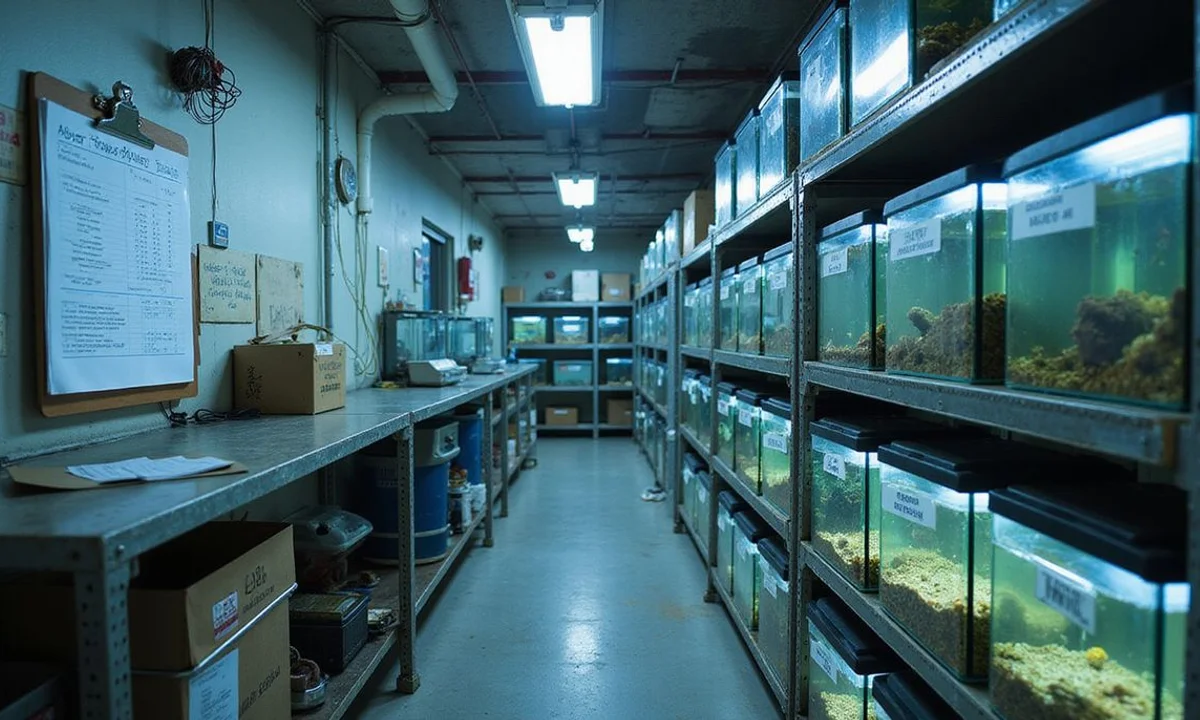
Every single saltwater fish that arrives at the facility begins its journey in our dedicated quarantine system. Two weeks is our absolute minimum hold time. Many sensitive species, like wild-caught angels, tangs, and anthias, stay much longer to ensure their health.
Our rigorous protocol covers four essential steps to protect your investment:
- Observation. Every new arrival is logged on intake with a clear photo, detailed condition notes, and behavioral assessments. Daily checks monitor for spots, breathing rates, healthy appetites, and proper waste production.
- Targeted Treatment. We use Copper Power to maintain a precise therapeutic level of 2.5 ppm, checking it daily with highly accurate Hanna instruments. Formalin baths treat stubborn flukes, while Prazipro addresses gill and internal parasites on an as-needed basis.
- Salinity Verification. Salinity remains tightly controlled throughout the entire quarantine period. Staff members perform a final refractometer recheck right before moving any animal to the sales area.
- Sales Floor Release. Only specimens that are actively eating, breathing normally, completely free of spots, and stable in our parameters get released to the main display tanks. Anything that fails to thrive gets returned to the supplier or managed humanely, ensuring it never reaches your home aquarium.
That extensive protocol remains the most important service provided for local homeowners and business owners. A single outbreak of Cryptocaryon irritans, commonly known as Marine Ich, can easily wipe out an entire established tank. Read exactly why skipping this process is never an option in our quarantine protocol guide.
What we stock
Our saltwater room inventory rotates on a weekly basis to bring you fresh, healthy options. Typical stocking for local aquariums includes:
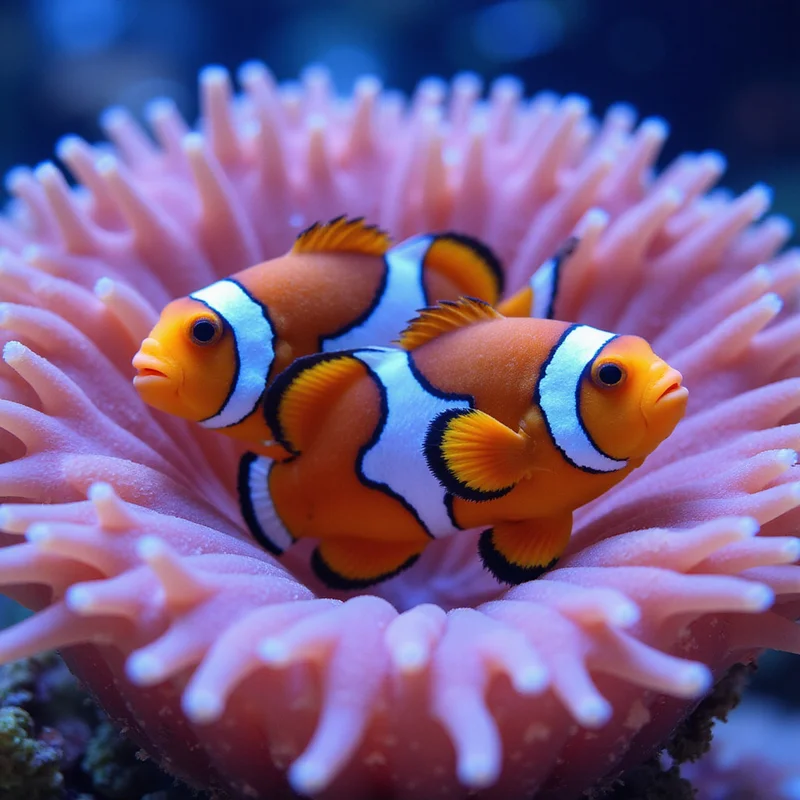
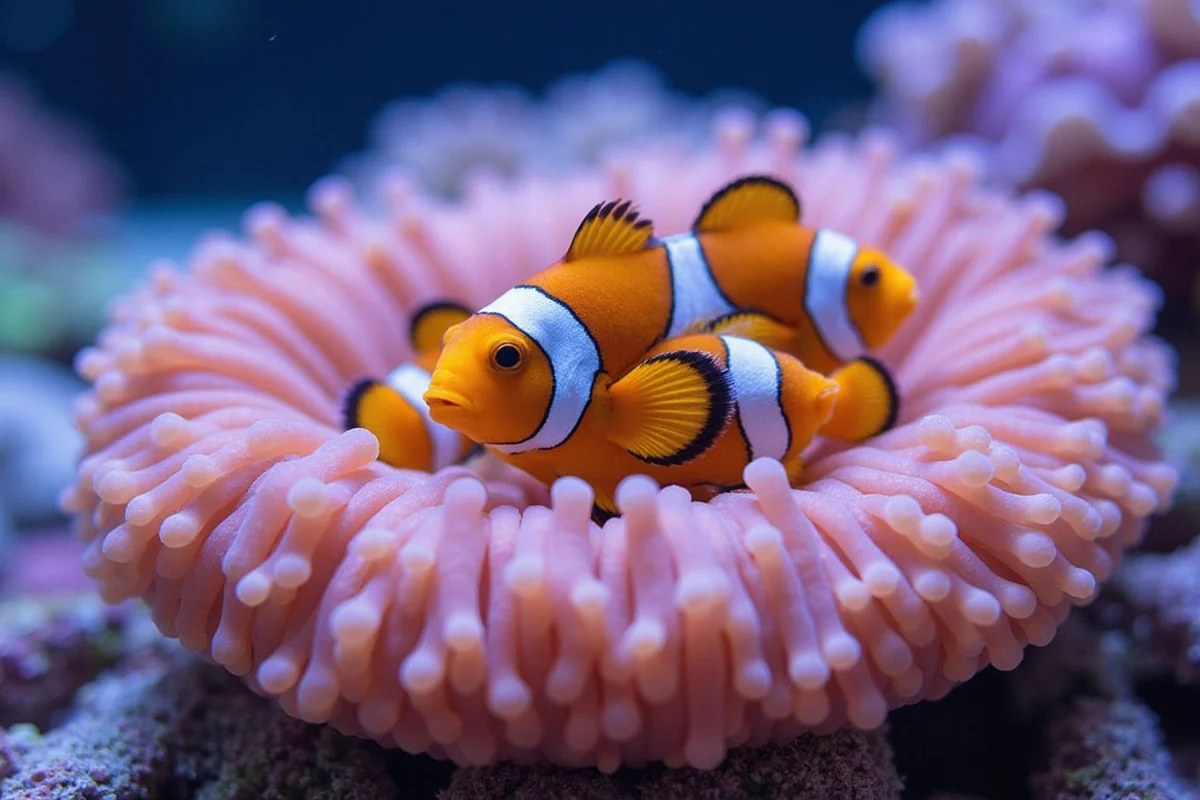
- Clownfish. We source healthy captive-bred Ocellaris, Percula, and incredible designer morphs like snowflakes and picassos from top US breeders like ORA. These remain the absolute best beginner options.
- Gobies and Blennies. Look for yellow watchman, diamond, lawnmower, midas, and tailspot varieties. These bottom-dwellers provide a reef-safe, peaceful, and easy-to-care-for addition to your sand bed.
- Wrasses. Six-line, fairy, flasher, leopard, and melanurus wrasses bring incredible bursts of color. Most prove reef-safe with a few specific caveats regarding small invertebrates.
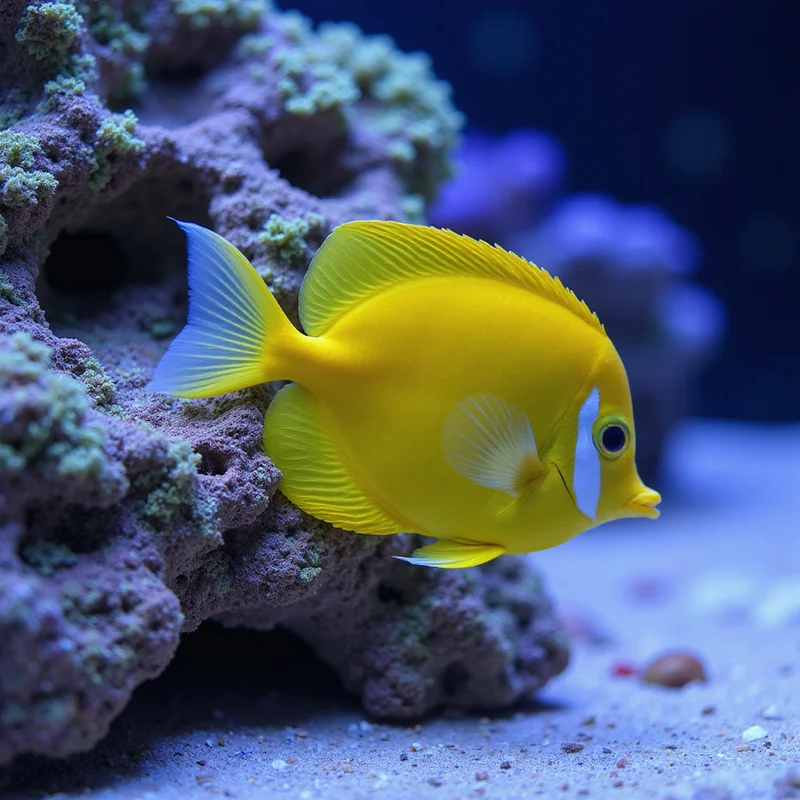
- Tangs. Yellow, hippo, sailfin, kole, tomini, and scopas tangs require ample swimming space. We will happily talk you out of buying a yellow tang if your setup is under 120 gallons.
- Dottybacks, Basslets, and Chromis. Royal grammas, neon dottybacks, and blue chromis offer brilliant shades of purple and blue. These serve as excellent centerpiece or schooling options.
- Anthias. We only stock these vibrant schooling beauties when we can source reliably healthy lines. Staff members hold these sensitive eaters much longer in the back room to ensure they readily accept prepared foods.
For specific species requests, please call ahead because our healthy stock moves incredibly fast. If you are hunting for something rare, placing a special order usually secures the animal within one to three weeks. Discover current staff favorites by reading our top 10 saltwater fish for Sarasota reefers.
Honest reef-safe stocking advice
The “reef-safe” label frequently gets thrown around carelessly in this industry. We operate under a very simple, honest rule. If an animal has any chance of nipping at your expensive fleshy LPS corals, delicate clams, or cleaning invertebrates, staff members will warn you before bagging it up.
That transparency applies to obviously risky choices like most large angelfish, as well as frequently mislabeled options. Review the specific differences in our guide covering reef-safe vs non-reef-safe saltwater fish.
Here is a quick breakdown of common fish types and their true coral compatibility:
| Fish Category | Typical Reef Safety | Common Exception or Warning |
|---|---|---|
| Clownfish | Very Safe | May aggressively defend their host anemone. |
| Large Angelfish | High Risk | Frequently nip at fleshy LPS corals and clam mantles. |
| Hawkfish | Coral Safe | Will aggressively hunt small ornamental shrimp. |
| Dwarf Angelfish | Moderate Risk | Coral Beauty and Flame Angels are a 50/50 gamble. |
We will also gently push back on stocking plans that simply will not work for your specific dimensions. Dropping a baby blue tang into a 55-gallon tank guarantees it will not thrive long-term. Mixing two adult clowns of completely different species usually results in deadly territorial fighting.
A small starter school of green chromis almost always dwindles down to just one or two dominant individuals over a few months. None of this honest advice stops us from making sales to eager customers. It simply stops us from selling you a beautiful creature that will not survive in your specific environment.
Coming in: what to bring
The fastest and most productive visit starts with bringing a few simple things to the shop:
- A Water Sample: Grab about one cup of your current tank water.
- A Quick Photo: Snap a picture of your display and sump on your phone.
- A Stocking List: Jot down your current livestock and primary filtration equipment.
Our free in-store water testing utilizes high-grade reagents to check your exact salinity, calcium, alkalinity, magnesium, and phosphate levels. Hitting target numbers, like an alkalinity of 8.5 dKH and calcium around 420 ppm, makes all the difference for growing healthy coral.
Walk through our doors any time Monday through Saturday between 10 AM and 6 PM, or Sunday from 12 PM to 5 PM. You will find plenty of free parking available right outside on Bee Ridge Road. The dedicated saltwater room takes up the entire back half of the building.
Just head straight past the lush freshwater planted displays, and you will find us ready to help. Ready to bring your dream aquarium to life? Stop by the shop this week to find the perfect saltwater fish for your unique setup.
Our dedicated saltwater room is stocked with hand-selected marine livestock for Sarasota reef hobbyists. Every fish runs through our two-week quarantine protocol — observation, copper, formalin or Prazipro as needed — before it ever hits the sales floor. Special orders welcome for specific species you can't find locally.
Saltwater — in person
See the livestock before you buy. No two visits look the same.
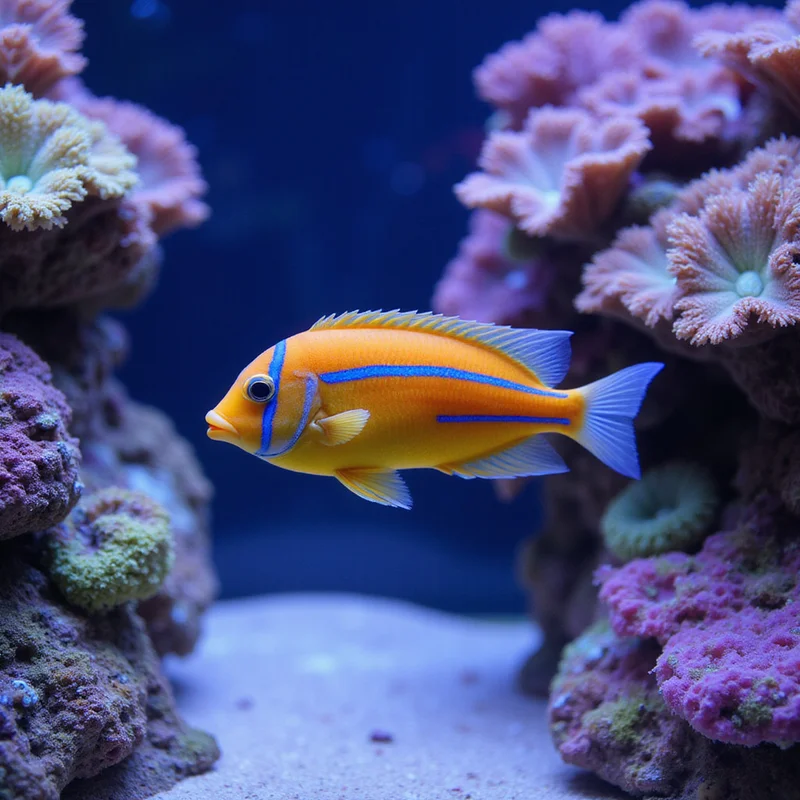
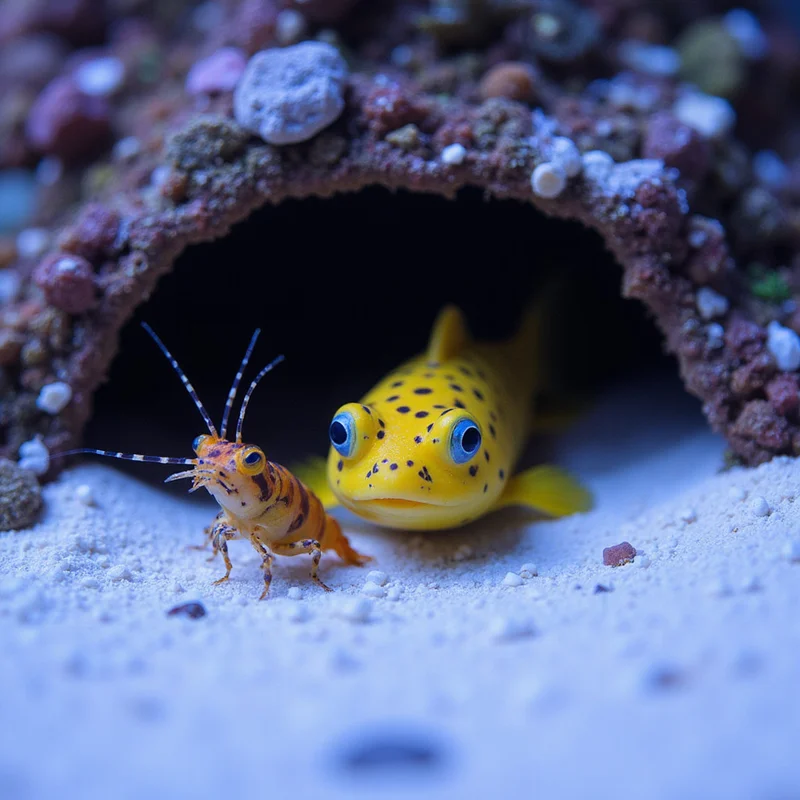
Saltwater reviews from Sarasota hobbyists
"The quarantine matters. I lost a whole reef to a sick fish from a chain store. Bought my last six tangs and wrasses from Gulf Coast — zero issues."
Saltwater Fish: common questions
How long do you quarantine new saltwater fish?
Minimum two weeks per fish, with copper, formalin or Prazipro as needed. Anything that shows ich, velvet, marine flukes or other issues doesn't reach the sales floor. We use Salifert and Hanna kits for daily parameter checks.
Can you special-order specific marine fish?
Usually yes. We work with multiple wholesalers and can put in a special order for specific species, captive-bred lines or that one wrasse you've been chasing. Some take one to three weeks; we'll quote the timeline up front.
What if a fish doesn't survive after I bring it home?
Talk to us. We acclimate every fish on sale day and we'll walk you through the drip method in store. If a fish dies within seven days of a documented healthy purchase, bring water parameters and we'll work it through with you.
Do you stock invertebrates and clean-up crews?
Yes — cerith snails, nassarius, blue-leg and scarlet hermits, peppermint shrimp, fire shrimp, cleaner shrimp, urchins and seasonal favourites. Bring tank size and we'll size the crew.
Free tool
Aquarium Size Calculator
Not sure if your tank can handle your stocking list? Run the numbers before you visit.
Try the calculator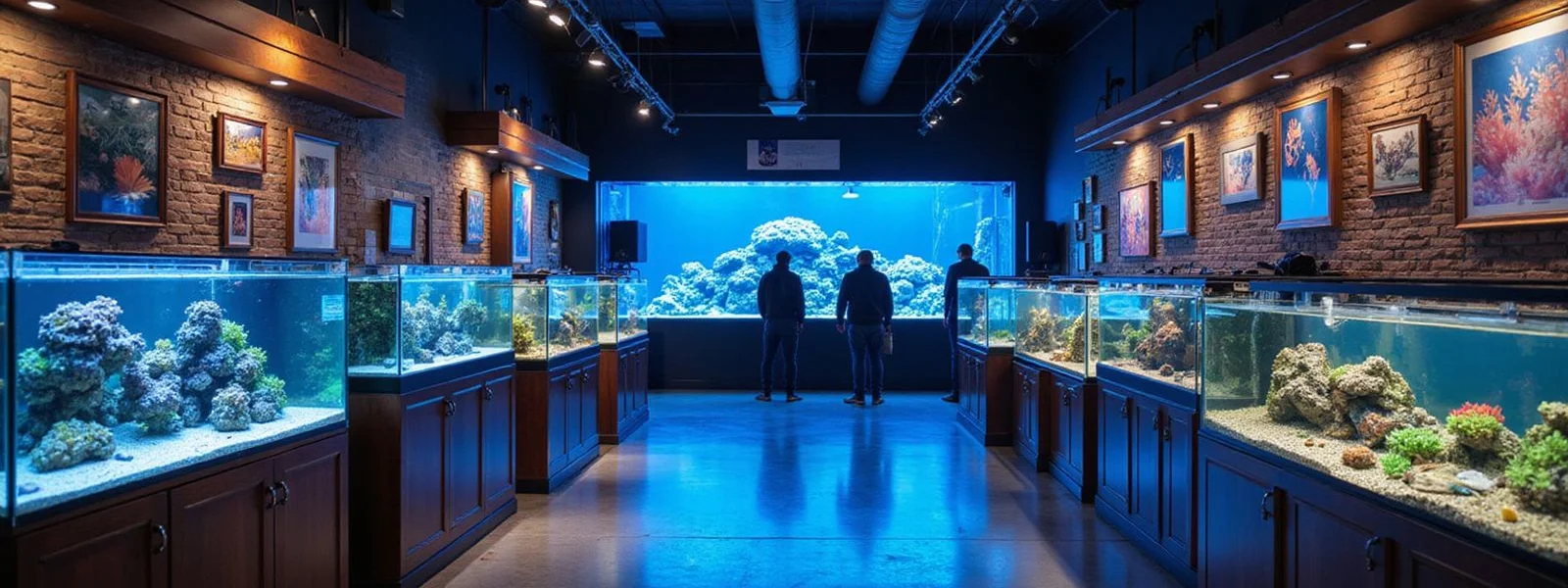
Saltwater done right starts with a visit.
Bring your tank photo and a water sample. We'll match your livestock to what your tank can actually support — free.