Stocking a new aquarium often feels like a guessing game of compatibility and hardiness. We hear this frustration from local homeowners and business owners every week. Getting the foundation right is crucial for long-term success.
This guide covers the best saltwater fish sarasota has to offer for stable reef systems. Our team at Gulf Coast Aquatics ranks these species by their resilience and consistent availability.
You will find specific details on care levels, tank minimums, and reef compatibility below. Let’s look at the data and explore exact stocking options for your display. Cross-reference each pick with our reef safe vs non-reef-safe fish guide before you commit.
1. Captive-bred Ocellaris Clownfish
Captive-bred Ocellaris clownfish are the most reliable starter species for local aquariums, requiring at least a 20-gallon tank. They are entirely reef-safe and offer an easy care level for beginners. We consider this the absolute foundation for any new marine setup. These hardy omnivores readily accept high-quality prepared options like TDO Chroma Boost pellets.
A healthy captive-bred specimen easily lives 10 to 15 years in a well-maintained system. Skipping wild-caught imports prevents common diseases like Brooklynella from entering your water column. Our team always recommends captive-bred variants because they adapt to synthetic salt mixes instantly.
“Captive-bred clownfish suffer significantly less transport stress than their wild counterparts, leading to higher survival rates.”
You can choose from dozens of designer morphs today.
- Snowflake: Features jagged white bands extending across the body.
- Picasso: Displays jigsaw-like patterns on the center stripe.
- Mocha: Offers a striking dark orange to brownish coloration.
- Gladiator: Showcases a clean, helmet-like white head pattern.
2. Yellow Watchman Goby
The Yellow Watchman Goby is an easy-care, reef-safe sandsifter perfect for tanks 20 gallons or larger. This peaceful bottom-dweller provides constant activity without bothering your corals. We keep these fascinating fish in stock most weeks for local aquarists.
They thrive when given a fine sandbed of at least two to three inches deep. Providing this substrate allows them to build proper burrows. Our favorite tank dynamic happens when you pair them with an Alpheus bellulus (Tiger Pistol Shrimp).
The shrimp digs the burrow while the goby acts as the lookout. This symbiotic relationship creates one of the best behavioral displays in a small setup.
“Pairing a watchman goby with a pistol shrimp reduces the goby’s stress levels and encourages them to stay visible near the burrow entrance.”
They stay small and eagerly eat frozen mysis shrimp or sinking pellets.
3. Yellow Tang
Yellow Tangs are moderate-care, reef-safe herbivores that require a minimum of a 75-gallon aquarium. They provide brilliant color and act as excellent algae grazers for larger setups. We consider them a staple for mature, spacious displays.
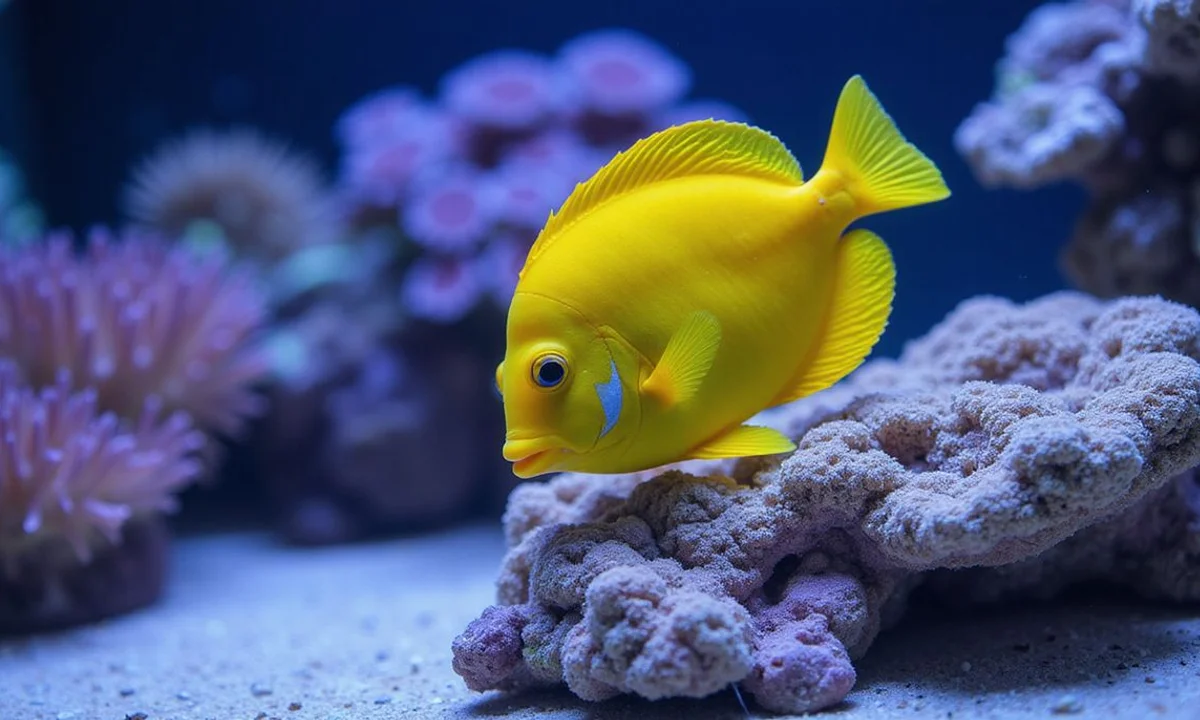
These active swimmers need extensive open rockwork and continuous horizontal swimming room. Restricting them to smaller tanks leads to severe stress and aggression issues. Our quarantine protocol for tangs is extensive because they are naturally susceptible to marine ich.
You must supplement their diet with dried Nori seaweed clips multiple times a week. Biota captive-bred Yellow Tangs are now frequently available as a sustainable alternative to wild Hawaiian imports.
Key benefits of choosing captive-bred tangs include:
- Guaranteed immediate acceptance of prepared pellet foods.
- Zero risk of introducing wild ocean parasites.
- Significantly less stress during the transport process.
- Support for sustainable aquaculture practices.
4. Royal Gramma
The Royal Gramma is an easy-to-keep, reef-safe basslet suited for tanks 30 gallons and up. This fish adds a brilliant purple-and-yellow splash of color to any small reef. We frequently use them to populate the mid-to-lower regions of a display.
They settle directly into the rockwork and claim a specific cave or crevice. Providing ample hiding spots prevents territorial disputes with other tank inhabitants. Our staff notes that they top out at roughly three inches in length.
“A Royal Gramma will often swim upside down or sideways to orient its belly toward the nearest rock surface, which is a completely normal behavior.”
They are completely peaceful with invertebrates but will fiercely defend their chosen cave from other basslets. Feeding them is incredibly simple. They aggressively accept small marine pellets, frozen brine shrimp, and crushed flake foods.
5. Six-Line Wrasse
The Six-Line Wrasse is a moderate-care fish that requires at least a 40-gallon tank and is reef-safe with a few caveats. This active swimmer is highly prized for hunting down nuisance hitchhikers on live rock. We recommend them highly for natural pest control in medium-sized systems.
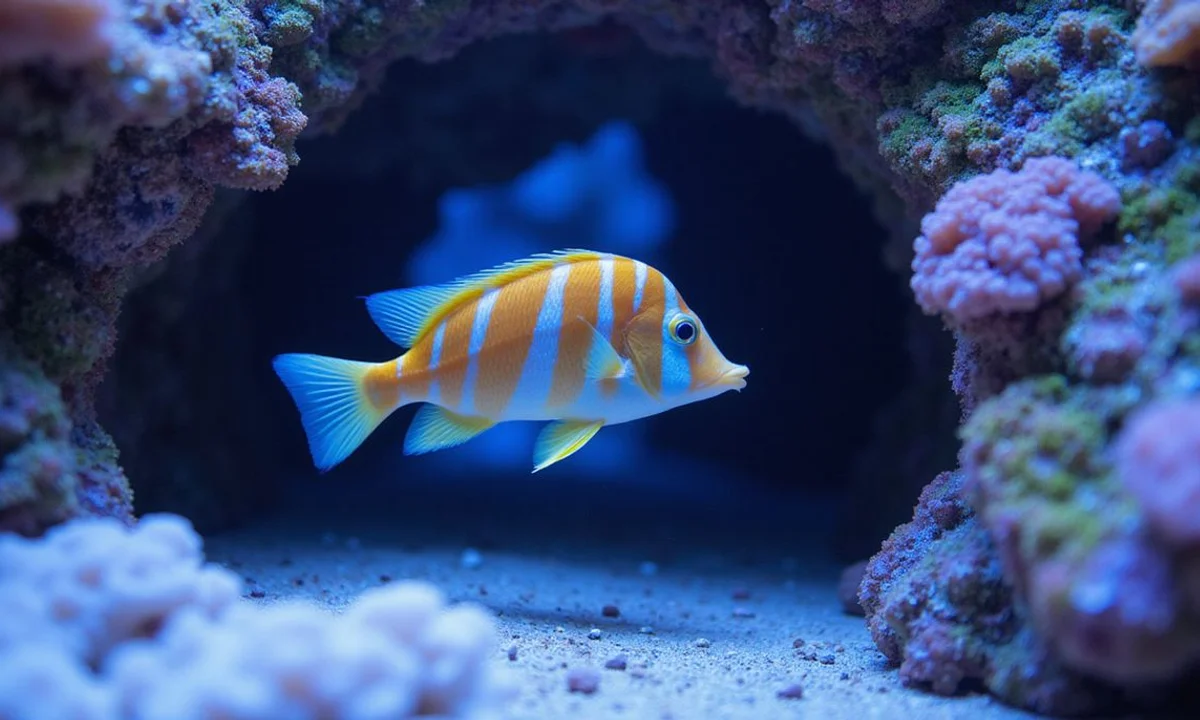
They actively consume destructive flatworms and parasitic pyramidellid snails that threaten Tridacna clams. A well-fed wrasse constantly darts through the aquascape searching for tiny prey. Our main warning involves their tendency to become territorial over time.
You must introduce them as the absolute last fish in your stocking plan.
- Space Needs: A 40-gallon tank with heavy rockwork diffuses their aggression.
- Behavior Watch: Keep a close eye on them around small, passive gobies.
- Dietary Needs: They require frequent feedings of meaty foods to prevent boredom.
- Sleeping Habits: They form a mucous cocoon in the rocks at night.
6. Firefish (Magnifica)
Firefish are easy-care, reef-safe dartfish that need a 30-gallon tank for a single fish or 60+ gallons for a group. These striking fish feature a prominent dorsal fin and a peaceful schooling nature. We love adding groups of three or more to create visual movement.
Their most significant danger is their startlingly fast jumping ability. Securing a tight-fitting mesh lid is non-negotiable for this particular species. Our installations always use 1/4 inch clear netting to keep them safely inside the water.
Glass lids trap heat, making custom mesh screens the superior choice for Florida tanks.
“Dartfish use jumping as an instinctual defense mechanism when startled by sudden light changes or aggressive tankmates.”
They hover gracefully in the water column and eagerly eat small, meaty foods like calanus.
7. Captive-bred Banggai Cardinalfish
Captive-bred Banggai Cardinalfish are easy-care, reef-safe additions perfect for a 30-gallon minimum setup. These beautifully patterned, slow-moving fish prefer to school in small groups near branching corals. We exclusively source captive-bred specimens due to the endangered status of wild populations.
Wild-caught Banggais frequently arrive emaciated and rarely survive the transition to home aquariums. Sourcing captive-bred fish directly solves this massive mortality rate issue. Our captive-bred stock arrives healthy and immediately eats frozen PE Mysis shrimp.
This species has a fascinating reproduction cycle.
- The female releases eggs during courtship.
- The male catches the eggs in his mouth.
- He incubates them in his jaw for nearly a month.
- Fully formed miniature fry are released directly into the water.
8. Tailspot Blenny
The Tailspot Blenny is an easy-care, reef-safe nano fish that requires a minimum tank size of just 20 gallons. This tiny fish packs immense personality into a package that maxes out at 2.5 inches. We consider them the ultimate rock-perching addition for smaller office setups.
They feature a distinct dark spot at the base of their tail and striking eye markings. Watching them reverse their bodies into small circular holes in the rockwork is highly entertaining. Our maintenance crews rely on them as excellent passive algae grazers.
To keep a Tailspot Blenny thriving, ensure your system provides:
- Plenty of porous rockwork with natural crevices for sleeping.
- A healthy growth of soft film algae for daily grazing.
- Supplemental feedings of high-quality spirulina flakes.
- Peaceful tankmates that will not compete for bottom-dwelling territory.
9. Melanurus Wrasse
The Melanurus Wrasse is a moderate-care, reef-safe fish requiring a 75-gallon minimum tank. This active, vibrantly colored species requires a deep, fine sandbed for daily survival. We recommend a minimum of two to three inches of oolite sand.
They dive directly into the substrate every evening to sleep or hide from perceived threats. Coarse crushed coral will severely damage their mouths and bodies during this process. Our team values them as one of the best natural predators for large bristle worms.
They patrol the lower half of the aquarium with constant, energetic movement. Keep a tight lid on the tank, as any startled wrasse is a potential jumper.
“A healthy Melanurus Wrasse is one of the most effective natural solutions for eradicating predatory flatworms from a mature reef tank.”
10. Kole Tang (Ctenochaetus strigosus)
The Kole Tang is a moderate-care, reef-safe grazer requiring at least a 70-gallon aquarium. This Hawaiian native stays smaller than yellow or sailfin tangs, topping out around seven inches. We often suggest this as a perfect “first tang” for intermediate hobbyists.
They belong to the bristle-tooth family of tangs. This means they possess specialized mouths designed to vacuum up detritus and diatoms rather than just ripping large macroalgae. Our established reef tanks always run cleaner with a Kole Tang working the rocks.
“Bristle-tooth tangs spend up to 80% of their daylight hours actively cleaning the microscopic film from your live rock.”
They display a beautiful subtle coloration of thin horizontal stripes and a bright yellow eye ring. Provide high oxygenation and strong water flow to mimic their natural reef crest habitat.
What to avoid even if you see it elsewhere
Avoiding notoriously difficult fish will save your budget and prevent unnecessary livestock loss. The marine hobby is filled with stunning species that simply do not survive in average home aquariums. We constantly counsel new local clients against making these common purchasing mistakes.
Understanding the specific dietary and behavioral limitations of certain fish is critical. Many big-box stores will sell you a fish without explaining its microscopic food requirements. Our list of strict warnings includes some of the most popular, yet doomed, species.
Please cross these specific animals off your beginner shopping list immediately.
- Mandarin Dragonets: They require upwards of 1,000 live copepods daily and starve in standard tanks within months.
- Copperband Butterflyfish: These finicky eaters are incredibly hard to transition to prepared frozen foods.
- Powder Blue Tangs: They are highly susceptible to Cryptocaryon irritans (ich) and require a 180-gallon tank minimum.
- Mixed Clownfish: Placing two different species together guarantees territorial warfare and severe injuries.
- Starter Damsels: They mature into aggressive bullies that terrorize any future, more expensive additions.
How GCA stocks these
We keep most of this top 10 list physically in stock every week for your convenience. Yellow tangs, royal grammas, and captive-bred clowns are standard fixtures in our display systems. Our procurement process ensures that everything is vetted for health before it reaches the floor.
Species like Banggais, firefish, and melanurus wrasses rotate based on sustainable supplier availability. We hold our fish systems at a strict 1.025 specific gravity to match ideal reef conditions. Strict quarantine procedures ensure that livestock is eating actively before going home with you.
| In-Stock Frequency | Species Examples | Wait Time |
|---|---|---|
| Always Available | Ocellaris Clowns, Watchman Gobies, Tailspot Blennies | Same Day |
| Frequent Rotation | Banggai Cardinals, Firefish, Royal Grammas | 1-2 Weeks |
| Special Request | Specific Designer Clowns, Rare Wrasses | 1-3 Weeks |
Ordering less-common species is a routine process for our staff. Bring your exact tank dimensions and current livestock list when you visit the store. We will help you plan your additions carefully to ensure you get the best saltwater fish sarasota has available.
Start by assessing your current filtration capacity and call us today to schedule your final stocking consultation.
Frequently Asked Questions
Are all the fish on the list always in stock?
We rotate stock weekly. Call ahead or come in to check current availability. Most of the top species below are in stock 80% of the time.
Can you special-order anything on this list?
Yes. Most species can be special-ordered within 1-3 weeks through our wholesalers. We'll quote timeline and price up front.
What's your most-recommended single fish?
For most reef tanks, a captive-bred clownfish pair and a yellow watchman goby cover the centrepiece and sandbed roles beautifully. Both are hardy, peaceful and reef-safe.