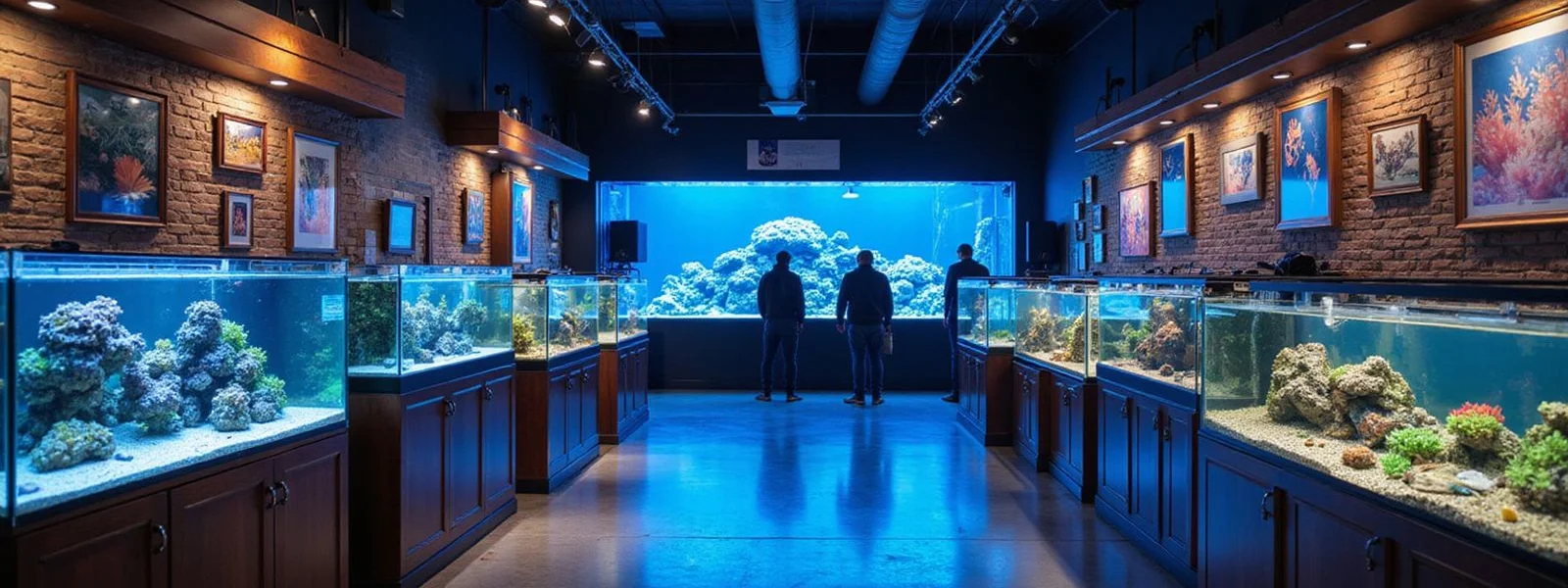
We see exactly how Gulf Coast weather patterns impact indoor aquariums. Most home reef tanks ride through minor seasonal changes without an issue, but a heavy red tide bloom with onshore winds changes the equation. If you are keeping a saltwater tank in Sarasota, you already know the beach closures and respiratory warnings that come with these events.
Airborne toxins and local water sources can introduce subtle stressors that are not immediately obvious.
We will break down exactly what happens during a heavy bloom, how it affects your equipment, and the practical steps to protect your livestock. If you are still putting your first marine setup together, also read our cycling a saltwater tank primer alongside this.
What red tide is
Our team tracks these blooms closely every season to help clients prepare. Red tide on the Florida Gulf Coast is an overgrowth of Karenia brevis, a microscopic dinoflagellate that produces powerful neurotoxins.
These brevetoxins kill marine life offshore and create significant respiratory irritation along the coast. Recent 2026 research from the University of Maryland confirms these blooms are becoming more persistent and severe due to warming coastal waters.
We know that the real threat to your aquarium comes from how these toxins travel. Karenia brevis produces multiple toxins, with PbTx-2 being the most abundant in the water and PbTx-3 dominating the aerosolized spray.
The Florida Fish and Wildlife Conservation Commission (FWC) issues a heavy bloom alert when concentrations exceed 100,000 cells per liter. You need to pay attention when local counts cross this threshold.
| FWC Concentration Level | Cell Count per Liter | Impact on Aquariums |
|---|---|---|
| Background | Under 1,000 cells | No impact |
| Low | 10,000 to 100,000 cells | Minor respiratory irritation, monitor skimmer |
| Medium to High | 100,000+ cells | Heavy aerosolization, proactive measures required |
The indoor air pathway
We find that the indoor air pathway is the most common way tanks get contaminated. Brevetoxins become aerosolised when waves break and release microscopic droplets.
With onshore winds, those 10-micron particles travel inland and concentrate in beachside areas. Most of the time, indoor air is safe because homes have low air exchange rates.
Toxin concentrations indoors are usually much lower than at the beach. Three specific factors make indoor tanks more exposed than ambient air:
- Protein skimmers create their own aerosol. If toxins enter your home, the skimmer can concentrate them in the skimmer cup effluent. The tank water is effectively scrubbing the air.
- Open windows during heavy bloom days with onshore winds let 10-micron toxin-laden air in directly.
- HVAC systems can pull in outside air, depending on your setup.
Our standard recommendation is to upgrade your home air filtration during bloom season. Upgrading to a MERV 13 or higher HVAC filter provides a better barrier against those 10-micron droplets.
You should also take immediate practical steps during heavy bloom days:
- Close windows on the beach-facing side of the house.
- Run your HVAC in recirculate mode rather than using the fresh-air intake.
- Check the skimmer cup more often, because extra organic load is a sign of stressed livestock or aerosol exposure.
- Switch the fresh-air supply line for your skimmer to pull room air instead of outside air.
Source water
We get a lot of questions about tap water safety during these events. The other pathway into your tank is your makeup water.
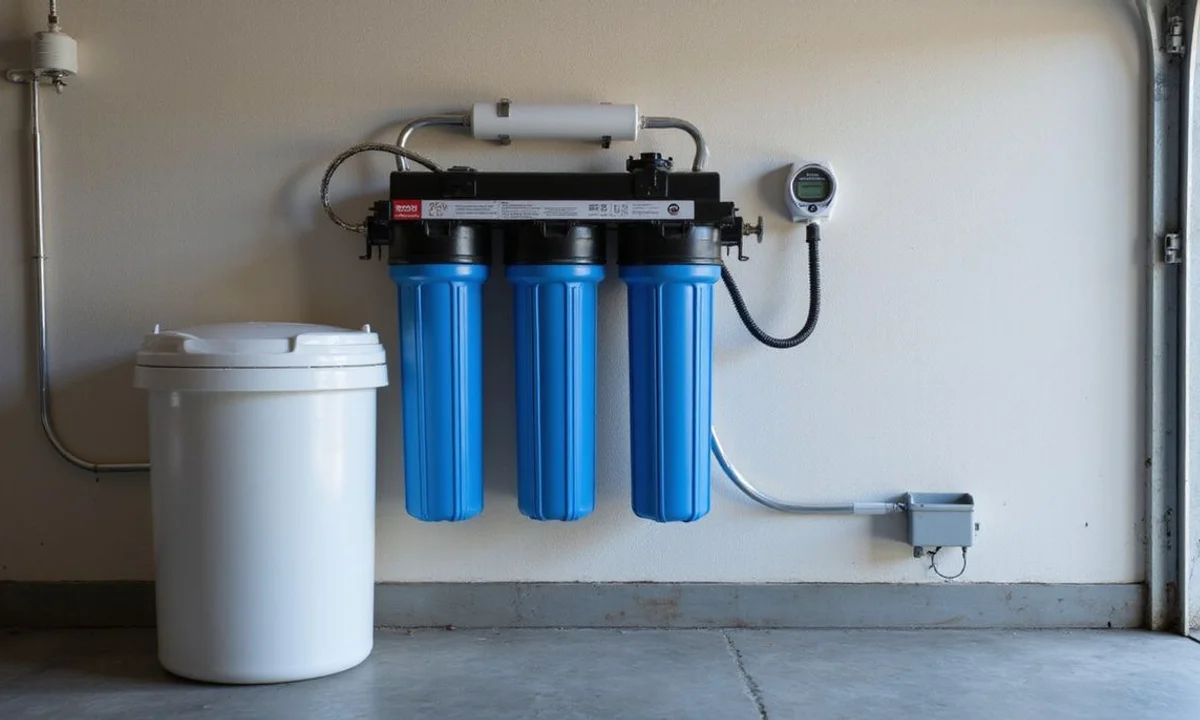
How you source your water determines your risk level during a bloom. Standard reverse osmosis (RO) membranes filter down to 0.0001 microns.
This is incredibly effective because the large polyether molecules of brevetoxins simply cannot pass through that barrier.
- Municipal water through RO/DI: Standard RO/DI removes brevetoxins completely. If you live in Sarasota, the city already treats its downtown supply with hollow-fiber reverse osmosis. Your tank water is unaffected by blooms.
- Well water: Inland wells are usually fine. Coastal wells, especially near intracoastal waterways, can become contaminated during heavy blooms. If you are on a well within a mile of the coast, switch to RO/DI for the duration of the event.
- Direct seawater intake: Anyone running natural seawater systems near the coast must monitor closely. Most home reefers do not use natural seawater. If you do, source it from offshore boat trips during clear water periods only.
Our local clients are generally in a great position here. In Sarasota, the vast majority of reefers use municipal water filtered through an at-home RO/DI unit.
Because the City of Sarasota draws from the deep Floridan Aquifer and treats it aggressively with reverse osmosis, the source water risk is negligible.
Protective steps for heavy bloom events
We always tell clients to keep things simple when conditions are bad. Beyond managing your air and water sources, you need to minimize additional stress on your system.
A red tide event is not the time to make major changes or push your tank parameters.
- Reduce feeding during stressful periods. Fish eat less when stressed, and uneaten food adds unnecessary bioload.
- Run high-grade carbon. Adding a pharmaceutical-grade activated carbon, like ROX 0.8, helps neutralize any aerosolized toxins that slip past your skimmer.
- Do not add livestock. New fish are already dealing with acclimation stress. Adding red tide stress on top of that is a recipe for losses.
- Watch parameter swings. Skimmers working overtime will deplete elements faster. Monitor your alkalinity closely, as you might see a drop of 0.5 to 1.0 dKH in a single week.
- Have a backup plan. If your area is under a heavy warning, know exactly where you would source replacement RO/DI water if your primary unit needs servicing.
Local resources
We monitor a specific set of tools to stay ahead of the weather. Tracking the bloom allows you to prepare before the winds shift.
Several local organizations provide accurate, real-time data for the Suncoast.
- Mote Marine Laboratory: Check their Beach Conditions Reporting System (BCRS) for daily updates on respiratory irritation levels across Sarasota County beaches.
- Florida FWC: Review their weekly red tide status maps. They update the interactive Google Earth data every Friday afternoon.
- NOAA Forecasts: The National Oceanic and Atmospheric Administration issues a Gulf Coast Harmful Algal Bloom Forecast, providing a 3.5-day prediction on bloom intensification.
- Local news weather: Most Sarasota stations report bloom status during active events.
When it is safe to resume normal routine
Our maintenance schedule returns to normal once the official warnings lift. Most blooms peak for one to three weeks and then gradually dissipate.
You can safely return to your routine once local cell counts drop below the warning threshold.
We watch the FWC reports closely. The state considers an area safe when the water tests at background levels, which means fewer than 1,000 Karenia brevis cells per liter.
Follow these recovery steps once the bloom clears:
- Verify the data: Ensure Mote and FWC maps show counts dropping below the alarm threshold.
- Wait 48 hours: Let any lingering airborne particles settle before opening your windows.
- Test your water: Confirm your alkalinity and calcium are stable before adding any new fish.
We are always here to help if things go wrong. If you have experienced any losses that you suspect are bloom-related, come in and our staff will walk through what happened.
Keep in mind that most issues are actually caused by something else. Bringing a water sample helps confirm the real issue.
Free water testing covers salinity, alkalinity, calcium, magnesium, and phosphate.
Our bottom line on red tide is straightforward. It is a real phenomenon worth understanding, but it rarely destroys indoor reef tanks running on RO/DI water. Good source water and reasonable air management are your best defenses. Most blooms come and go without your tank ever noticing the difference.
Frequently Asked Questions
Can red tide actually reach an indoor tank?
Aerosolised brevetoxins can enter through open windows or get drawn through skimmer intake. It's uncommon but possible during heavy blooms with onshore winds. Closing windows during heavy bloom days is sensible.
Should I stop water changes during a bloom?
If you're using municipal water filtered through RO/DI, you're already protected — RO/DI removes brevetoxins. The bigger risk is well water close to coastal aquifers or any direct seawater intake.
Where do I check current red tide status?
Mote Marine Laboratory and Florida FWC publish daily bloom reports for the Gulf Coast. The Mote Beach Conditions Reporting System is the most current local data.