Setting up a new marine aquarium in a home or office always comes with the temptation to buy the brightest, most exotic species right away. We see ambitious setups fail simply because the initial livestock choice could not handle the natural chemistry swings of a new system.
The first marine fish you buy will dictate whether you spend the next two years enjoying a thriving reef or constantly chasing water parameters. Let’s look at the data on what makes a species resilient, outline the best beginner saltwater fish to target this year, and share the exact stocklist we rely on.
Our team uses this exact framework at Gulf Coast Aquatics to ensure first-time keepers start with hardy, peaceful marine life.
What “beginner-friendly” actually means
A beginner-friendly marine fish must be hardy enough to survive early parameter swings, peaceful toward tankmates, safe for corals, and ideally bred in captivity. Our standard for these four properties ensures a low-stress environment for both the fish and the owner.
The biological filter in a new tank takes three to six months to stabilize. During this window, ammonia and nitrate levels can spike unexpectedly.
- Hardy: Tolerates parameter swings better than average. They possess a thick slime coat to resist common parasites like Cryptocaryon irritans (marine ich).
- Peaceful: Does not bully tankmates or claim aggressive territory. This allows you to add smaller, shy species later.
- Reef-safe: Will ignore corals and mobile invertebrates. Choosing reef-safe species ensures your tank can evolve into a mixed reef system.
- Captive-bred when possible: Possesses a better disease history and eats prepared flake or pellet food more readily.
Top hardy starter species
The most reliable starter fish include captive-bred clownfish, certain gobies, basslets, and schooling cardinalfish. Our top recommendations below score perfectly on temperament, hardiness, and compatibility for new aquarists.
| Species | Min Tank Size | Key Benefit | Average US Price (2026) |
|---|---|---|---|
| Ocellaris Clownfish | 20 Gallons | Accepts prepared foods instantly | $25 - $35 |
| Yellow Watchman Goby | 20 Gallons | Excellent sand sifter | $20 - $30 |
| Royal Gramma | 30 Gallons | Vibrant color, disease resistant | $30 - $40 |
Captive-bred clownfish (Ocellaris or Percula)
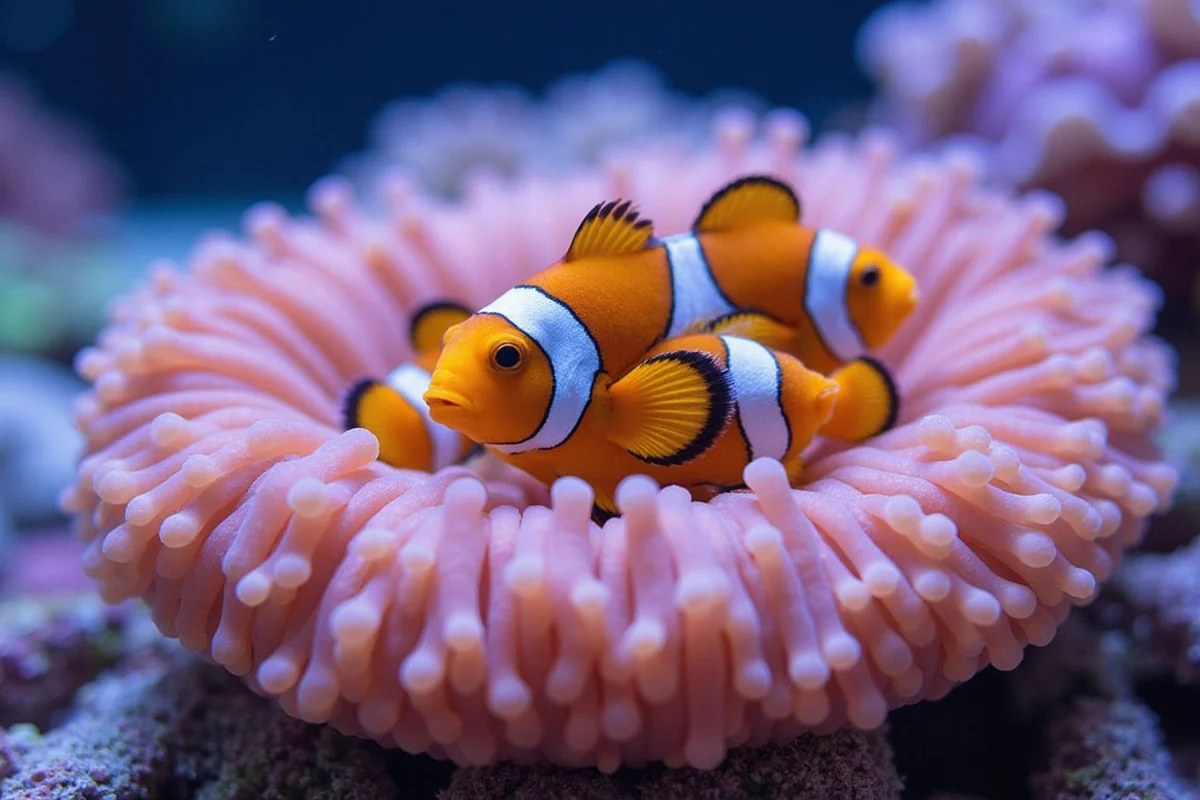
The classic Amphiprion ocellaris remains the gold standard for good reason. These fish are hardy, peaceful, and available in dozens of captive-bred designer morphs right here in the US.
We always suggest purchasing a single clown or a bonded pair of the exact same species. Mixing an Ocellaris with a Maroon clownfish will result in fatal territory disputes.
- Tank minimum: 20 gallons.
- Reef-safe: Yes.
Yellow Watchman Goby
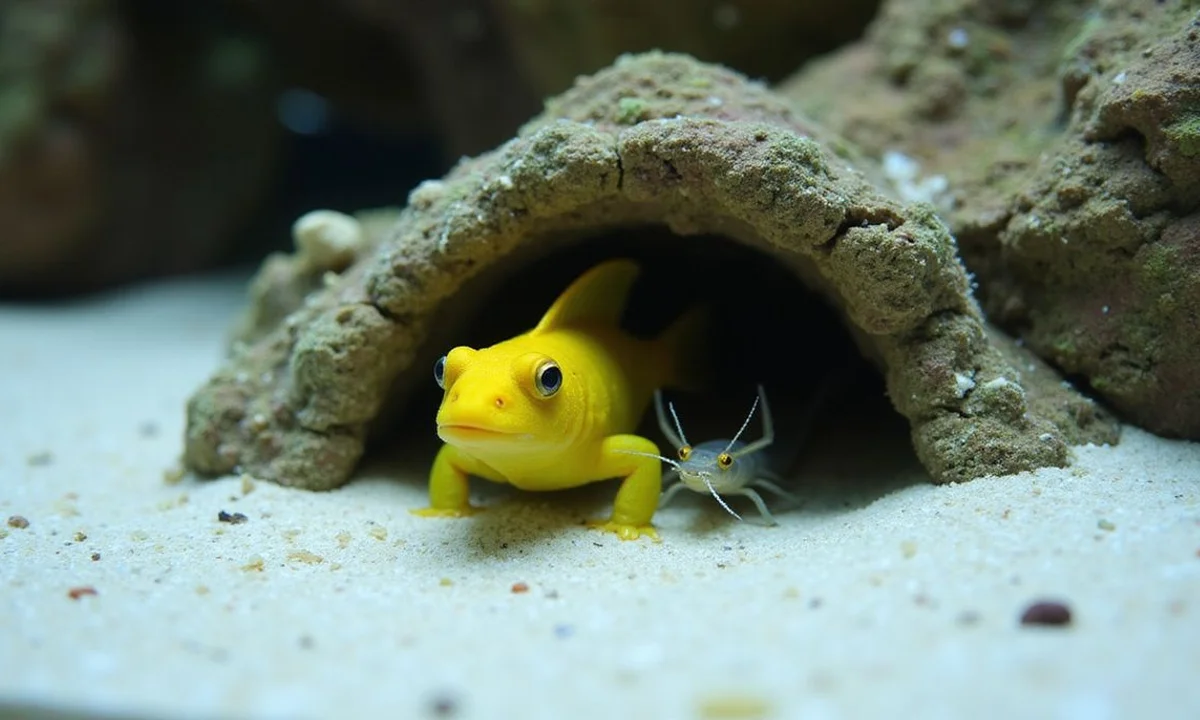
This diligent sandsifter often pairs with a symbiotic crustacean, specifically the Tiger Pistol Shrimp (Alpheus bellulus). This natural partnership provides incredible behavioral displays as the practically blind shrimp digs a burrow while the goby stands watch.
Our clients find that adding this pair is one of the most rewarding additions to a small office or home reef. Both species are readily available and simple to feed with standard sinking pellets.
- Tank minimum: 20 gallons.
- Reef-safe: Yes.
Royal Gramma
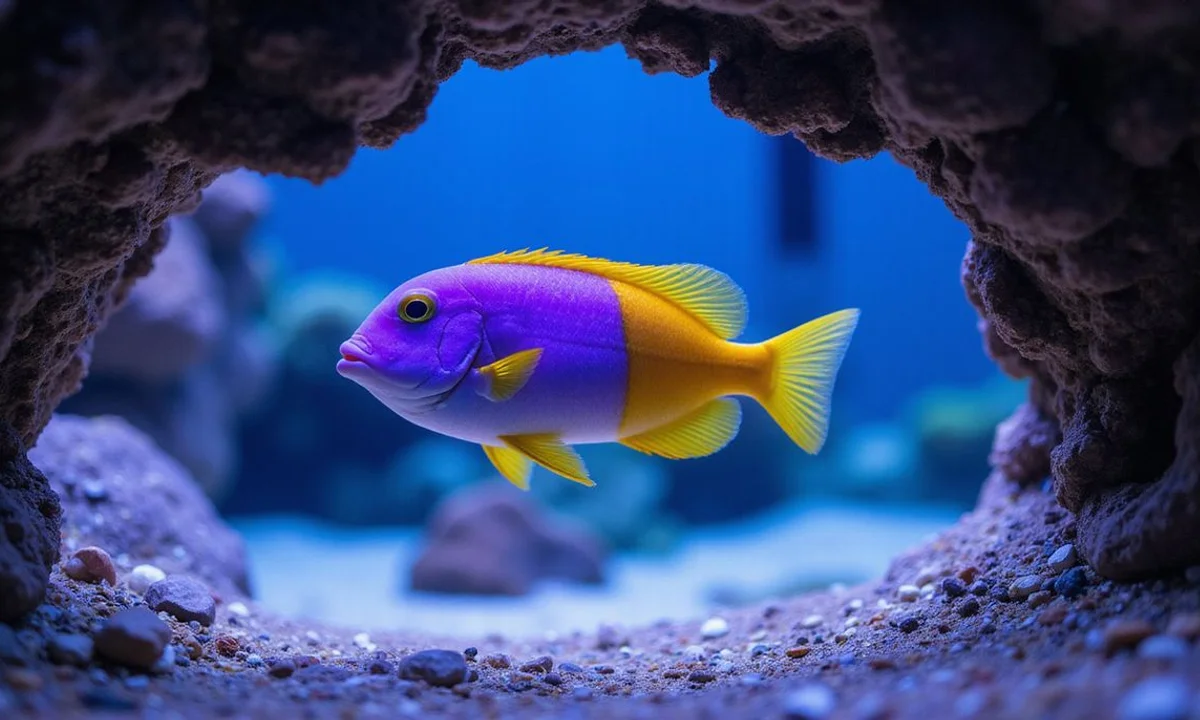
The Royal Gramma (Gramma loreto) is a striking purple-and-yellow basslet that quickly settles into rocky crevices. It stays peaceful with everything except other basslets and accepts a wide range of frozen or prepared foods.
We love this species because it delivers intense coloration without the aggression seen in similar-looking dottybacks.
- Tank minimum: 30 gallons.
- Reef-safe: Yes.
Firefish (Magnifica or Helfrichi)
Firefish are schooling-tendency gobies that look beautiful and behave peacefully in groups of three or more. Their slender bodies make them incredibly agile darting around the water column.
Our maintenance teams mandate a tight-fitting mesh lid with quarter-inch netting for these fish. Firefish are notorious jumpers and will quickly find the smallest gap in an open-top aquarium.
- Tank minimum: 30 gallons (60+ for a group).
- Reef-safe: Yes.
Tailspot Blenny
The Tailspot Blenny packs a massive personality into a tiny, three-inch package. This fish perches on rocks, constantly grazes on nuisance microalgae, and requires very little swimming space.
We frequently use them in nano setups under 30 gallons. They are incredibly easy to keep and actively help manage algae outbreaks during the early months of a new tank.
- Tank minimum: 20 gallons.
- Reef-safe: Yes.
Six-Line Wrasse
Active and colorful, the Six-Line Wrasse serves as a dedicated pest controller by eating nuisance hitchhikers like flatworms and small bristle worms. A single wrasse can completely clear a mild flatworm infestation in a matter of weeks.
Our experience shows this species can become highly bossy in cramped nano environments. They work much better in 40-gallon or larger setups with complex rockwork that breaks up sightlines.
- Tank minimum: 40 gallons.
- Reef-safe: Yes, with caveats.
Captive-Bred Banggai Cardinalfish
The Banggai Cardinalfish (Pterapogon kauderni) is a slow-moving, peaceful species that thrives in small schools. You must ensure you purchase captive-bred specimens only.
We stress this rule because wild-caught Banggais are currently listed as endangered by the IUCN due to over-collection in their native Indonesian habitat. Captive-bred variants are hardier, disease-free, and actively support global conservation efforts.
- Tank minimum: 30 gallons (for a small group).
- Reef-safe: Yes.
Diamond Watchman Goby
The Diamond Watchman Goby (Valenciennea puellaris) is a much larger sandsifter than the yellow watchman, working constantly to keep sandbeds clean and beautifully white. It filters large mouthfuls of sand to extract small organisms.
Our installers always ensure a deep sandbed of at least two to three inches before introducing this species. It will not pair with a pistol shrimp and requires ample open substrate to graze.
- Tank minimum: 50 gallons.
- Reef-safe: Yes.
What NOT to start with
Beginners should completely avoid fish with specialized diets, massive space requirements, or terrible survival rates in captivity. Our team routinely steers new hobbyists away from these specific species during their first year.
- Tangs in small tanks. A Yellow Tang (Zebrasoma flavescens) in a 40-gallon enclosure will not thrive long-term. Most tangs swim miles every day and require 75+ gallons, ideally 100 or more, to prevent stress-induced illnesses.
- Anthias. Beautiful but incredibly picky eaters that often hunger-strike in captivity. They need multiple feedings of zooplankton every single day and strictly stable water conditions.
- Mandarin Dragonets. These stunning fish eat live copepods almost exclusively, consuming up to a thousand a day. They demand a mature tank running for at least six months with an established refugium and a massive copepod population.
- Copperband Butterflyfish. This species is notoriously difficult to feed frozen foods. A high percentage of wild-caught specimens die within their first few weeks in a home aquarium.
- Wild-caught angels (Coral Beauty, Flame, Bicolor). These dwarf angels often hide for weeks before showing signs of bacterial infections or parasites. They are much better suited to intermediate keepers with dedicated quarantine setups.
Acclimation expectations
New marine fish require a slow, controlled transition to match the temperature, pH, and salinity of your display tank. We mandate a slow drip acclimation process to prevent lethal osmotic shock.
Osmotic shock occurs when rapid changes in water chemistry rupture the fish’s cellular membranes, often causing death within 48 hours. You can prevent this by following a few critical rules.
- Time the Drip: A standard drip acclimation takes 60 to 90 minutes for most species, but sensitive fish like wrasses require slightly longer.
- Watch the Ammonia: Opening a shipped bag releases carbon dioxide, raising the pH and turning harmless ammonium into highly toxic free ammonia.
- Neutralize the Water: Add a dose of an ammonia binder like Seachem Prime to the bucket immediately. This simple 2026 industry standard protects the fish’s gills.
- Pace the Bioload: Add no more than one or two fish in the first month after cycling. Adding three or four fish at once is a classic way to crash a new tank.
Our service teams space out new livestock additions every two to four weeks. Marine biological filtration needs time to scale with the waste load.
For the full procedure, see drip acclimation for saltwater fish.
How GCA stocks beginner-friendly species
A successful tank relies on purchasing healthy, pre-conditioned livestock from a verified source. We maintain a steady inventory of the resilient species discussed above, including rotating availability on captive-bred clown morphs and schooling firefish.
Every single fish entering our facility runs through our two-week quarantine before it ever reaches the sales floor. This strict protocol eliminates parasites like marine ich and ensures the fish is actively eating prepared meals.
If you are planning a first marine tank for your home or business, come in prepared:
- Bring your exact tank dimensions.
- Provide a complete list of your current equipment.
- Bring a freshly collected water sample for testing.
Our experts will map out your stocking sequence, detail exactly what to add first, and flag what species you should wait on. The first three months of a marine tank go best when stocking is patient. There is no prize for filling the glass box fast.
Frequently Asked Questions
Are clownfish really the best starter?
Captive-bred clowns are hardy, peaceful and inexpensive. Usually the right first fish for a beginner reef tank, either solo or as a bonded pair of the same species.
Can I start with a tang?
Only if your tank is large enough — most tangs need 75+ gallons. They're stress-prone in small tanks and the first to break with ich. Start with smaller hardy species and add a tang later if your tank can support one.
How many fish on day one?
One or two. Light bioload lets biological filtration mature past the cycle without spikes. Add another fish every 2-4 weeks after parameters stay stable.