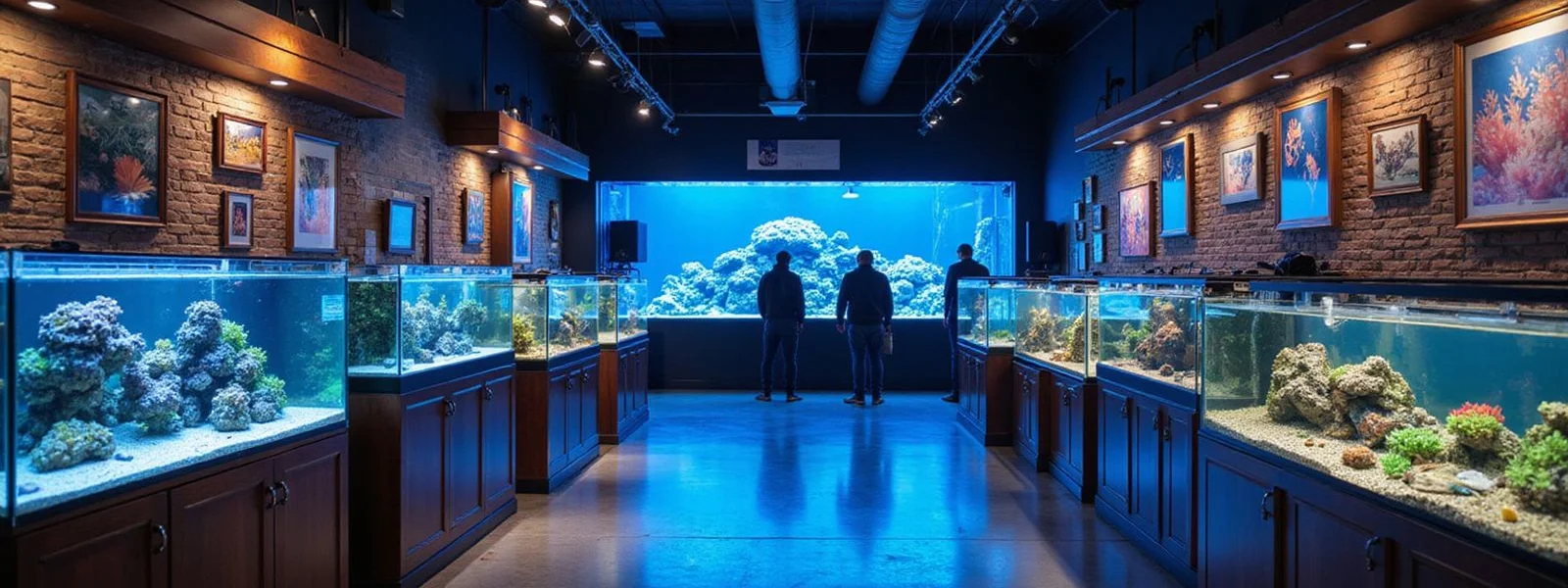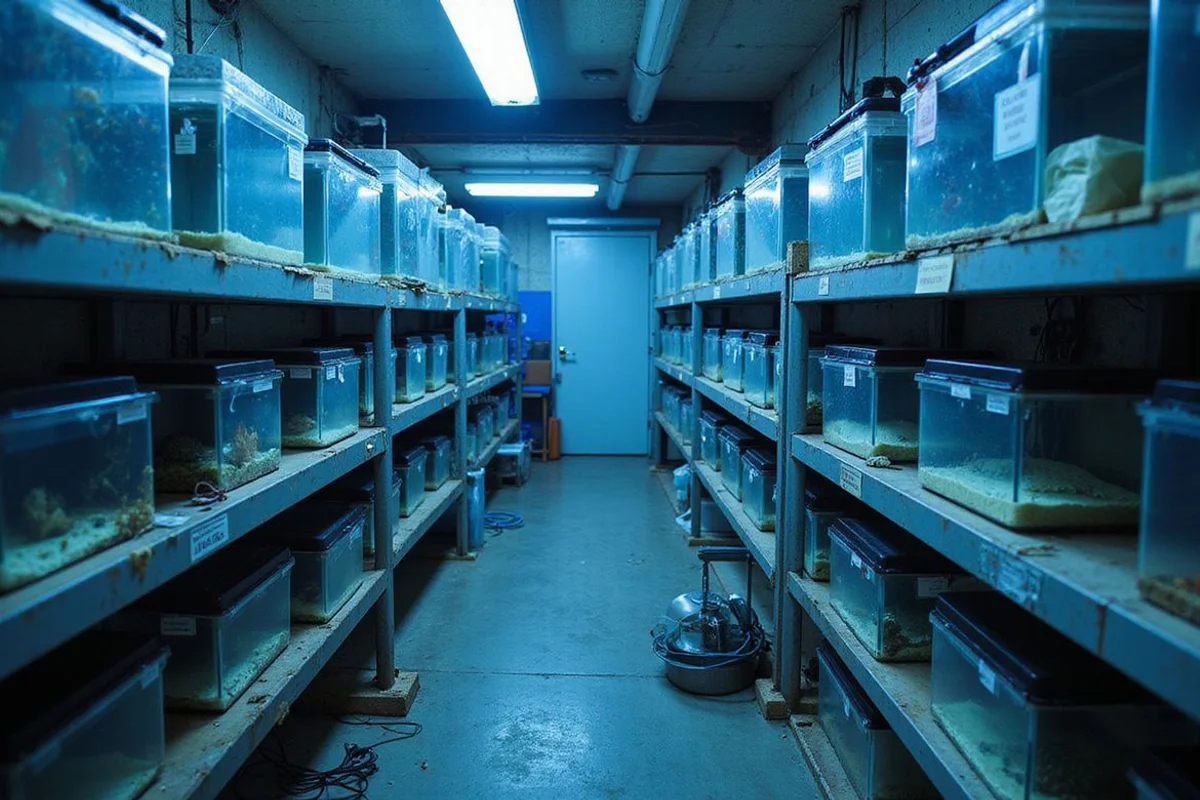
We know the first two weeks determine a new fish’s survival rate in your display tank. Every fish at Gulf Coast Aquatics runs through a strict, minimum two-week quarantine before it reaches the sales floor. Our strict protocol is the primary reason the saltwater livestock you buy locally in Sarasota thrives when standard big-box arrivals fade away. That 14-day window is the fastest way to crash an established system if handled poorly. We will break down the exact timeline, the specific medications involved, and the financial reasons this matters for your tank.
Day 0: intake and observation
Every shipment arriving at the store gets logged with a standardized intake process. We photograph each fish and record condition notes on clear eyes, intact fins, and normal breathing. This initial documentation also captures behavior notes on swimming patterns, light response, and food interest. We immediately place the fish into a dedicated quarantine tank featuring a separate filtration loop, separate water source, and separate equipment.
| Parameter | Target Range | Testing Tool |
|---|---|---|
| Specific Gravity | 1.025 - 1.026 | Hanna Salinity Tester or Refractometer |
| Temperature | 76°F - 78°F | Digital Aquarium Thermometer |
| Ammonia | 0 ppm | Standard Reagent Test Kit |
Daily observation begins the moment they hit the water. We specifically monitor water parameters to match a specific gravity of 1.025 to 1.026 using a calibrated refractometer or Hanna Salinity Tester. A stable environment is critical, so the quarantine water temperature stays locked between 76 and 78 degrees Fahrenheit.
Our first 24 to 48 hours focus heavily on spotting stress symptoms like clamped fins, hiding, rapid gill movement, or refusing food. These signs do not necessarily indicate disease immediately, but they dictate how closely the fish requires monitoring over the next 14 days.
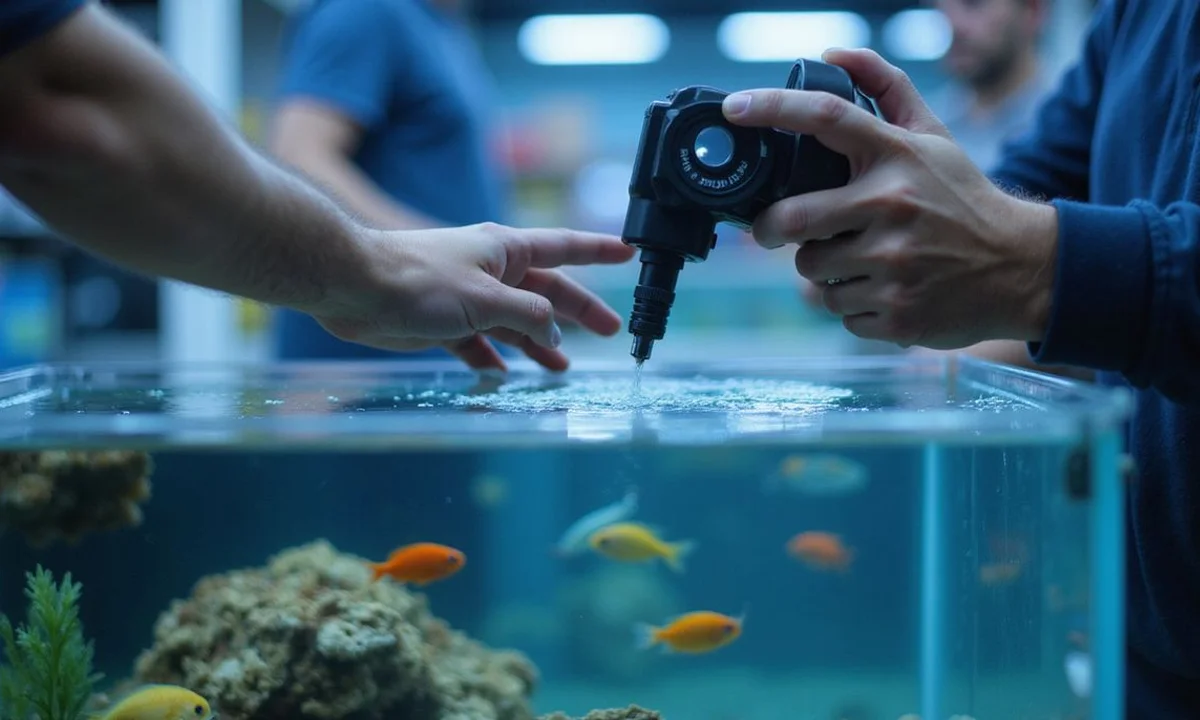
Days 1-14: treatment when it’s needed
Blanket treating fish with chemicals causes unnecessary organ stress. We use targeted medications based entirely on the specific symptoms presenting in the isolation tanks. The aquarium quarantine protocol relies on a few very specific applications:
- Copper Power (Chelated Copper): Treated at a highly specific therapeutic level of 2.0 to 2.5 ppm. We monitor this daily with a Hanna High Range Copper Checker (HI702) to safely eradicate marine ich (Cryptocaryon irritans) and velvet (Amyloodinium ocellatum). The dosage holds steady for the full life cycle, not just until white spots vanish.
- Formalin Baths: We administer short 35-minute to 45-minute baths in a separate container for marine flukes that copper alone misses. The mixture requires approximately 1 mL of 37 percent formalin per 10 gallons of heavily aerated water.
- Prazipro (Praziquantel): We apply this liquid medication for stubborn gill flukes and internal parasites. This works perfectly as a preventative measure for tangs, anthias, and wild-caught fish carrying higher baseline parasite loads.
- Hyposalinity: Our technicians slowly lower the specific gravity down to 1.009 for sensitive fish that struggle in copper. This creates a safe but effective environment for killing Cryptocaryon over a longer period.
We find that freshwater treatments require less intense chemical intervention. The process typically uses short-course targeted antibiotics or antifungals only when physical symptoms appear. Our strict daily observation discipline remains exactly the same regardless of the water type.
What the protocol catches
A full two weeks provides enough time to catch the silent diseases that destroy home tanks. We designed this timeframe to match the biological lifecycles of the worst marine parasites. The fish quarantine process successfully identifies and stops the following issues:
- Marine ich: The life cycle lasts roughly two weeks at typical 78-degree reef temperatures. We know the white spots invisible on day one will usually present themselves clearly by day three or four.
- Velvet (Amyloodinium): This parasite moves incredibly fast and proves lethal in display tanks within 24 to 72 hours. Our quarantine catches early infections immediately before they trigger a massive outbreak.
- Brooklynella: Known heavily as clownfish disease, this often arrives quietly with new captive-bred shipments. We use early detection to prevent the rapid skin sloughing associated with the infection.
- Marine flukes: Copper alone fails to touch these tiny flatworms. We utilize targeted formalin baths or Prazipro to force the flukes to detach from the gills and skin.
- Internal parasites: These hidden threats remain completely invisible until the fish stops eating entirely. Our observation period and preventative treatments catch the vast majority of these cases early.
Understanding the specific symptoms of these infections helps you protect your investment. We highly recommend reviewing our detailed breakdown of common fish diseases and how quarantine prevents them to see what each issue looks like.
Day 14: release to sales floor
A specimen only transfers from the isolation block to the main retail display tanks when it passes a strict health audit. We require every single fish to meet four specific criteria:
- The fish must be eating reliably on standard shop foods.
- We need to see normal breathing with a gill rate clearly within the safe range.
- The specimen must be completely free of visible disease, meaning zero spots, fin damage, or lesions.
- Our team ensures the water parameters are stable, including zero remaining copper exposure if heading to a reef-safe display.
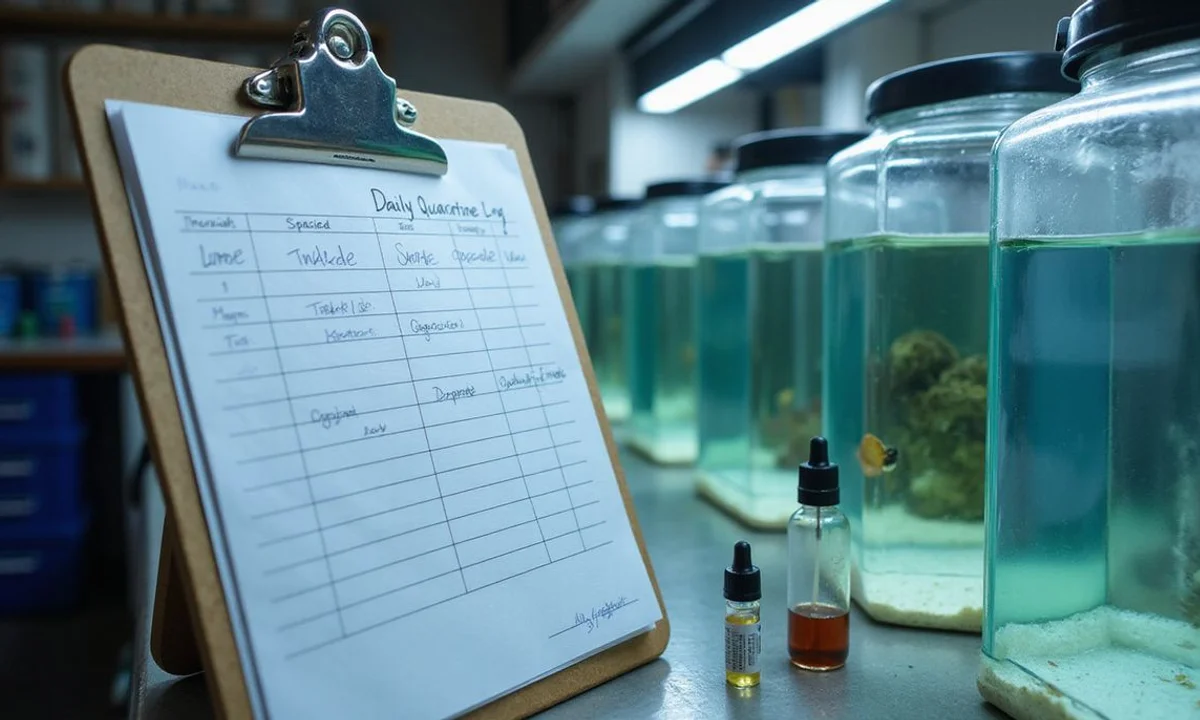
Any fish failing this final check remains in the isolation tanks for an extended period. We return the livestock directly to the supplier if it shows no signs of recovering. Detailed tracking tells us exactly which fish arrived from which shipment. We use this data to determine if a sudden illness is just a one-off issue or a massive wholesaler contamination problem.
What this means for your tank
A two-week hold at the store does not serve as a total substitute for your own dedicated setup at home. We highly encourage many advanced reefers to run an additional observation period for any new arrivals. Good practice always involves patience and redundancy.
Our protocol intentionally shifts the highest-risk period directly onto our facility rather than onto your established display. The first two weeks after import feature the most intense stress and the highest disease vulnerability for any marine life.
We guarantee that if a fish breaks down physically, it happens inside our controlled environment instead of your living room.
That level of protection represents the core difference between a specialty aquatics store and a massive chain pet retailer. We hold every single quarantined saltwater fish in Sarasota for 14 days before you ever see it. A standard chain location stocks whatever wholesalers ship them, frequently selling the animals the very same week they arrive. We know the retail price tags often look the same at both stores, but the actual risk to your home aquarium certainly does not.
The cost of skipping it
One untreated big-box purchase has the power to completely wipe out an established reef. We hear the exact same tragic story hundreds of times a year. A hobbyist picks up a healthy-looking tang, drops it into a five-year-old display, and watches Velvet systematically take out every fish in the tank over the next 48 hours.
We see people try to save a few dollars on a cheap $40 chain-store fish, only to lose a $3,000 standard 100-gallon marine setup full of mature coral and premium livestock.
That scenario is an unrecoverable financial and emotional loss. Our entire quarantine facility at Gulf Coast Aquatics is specifically built around making sure that disaster never happens with our fish. A massive tank crash requires immense patience to fix correctly.
We recommend you come in with a sample of your tank water so our team can map out a recovery plan covering:
- The necessary 76-day fallow period.
- Our specific guidelines for proper equipment cleanup.
- Exactly how to restock safely without triggering new parasites.
Frequently Asked Questions
Why 2 weeks specifically?
Most marine parasite life cycles — ich and velvet in particular — need roughly 14 days for treatment to break the cycle and for any latent symptoms to surface. Anything shorter and you risk missing the window where infections become visible.
Do you quarantine freshwater fish too?
Yes. Freshwater quarantine is usually shorter (the parasite landscape is different) but every freshwater fish is held and observed before sale. We pull anything showing ich, fin rot or fungal issues.
What if a fish doesn't make it through quarantine?
It never reaches the sales floor. Affected stock is returned to the supplier or, when necessary, humanely euthanised. The whole point of the protocol is that the risk stays with us, not your tank.