You invest significant time and money into a beautiful display, only to wake up to a frustrating loss. We field the exact same question from homeowners and business owners every single week: why my saltwater fish keep dying? The answer almost always boils down to one of five specific issues — and rarely the saltwater fish themselves.
Our team has diagnosed hundreds of these cases over the years.
Figuring out what went wrong is a straightforward process of elimination.
We can help you sort this out in person if you want to skip the guesswork. Simply come visit Mon-Sat 10-6 or Sun 12-5. Our retail staff runs free water testing for anyone who walks in, with no purchase needed.
Cause 1: Uncycled tank (new tank syndrome)
Adding livestock before the aquarium establishes its biological foundation guarantees a failure due to ammonia poisoning. We call this uncycled environment new tank syndrome, and it remains the top reason new marine fish die. Biological filtration takes a full 4 to 6 weeks to mature in a fresh saltwater setup.
Our service technicians routinely see lethal ammonia spikes happen within three days of adding fish to an immature system. The bacteria needed to process that waste simply do not exist yet.
Signs of an Uncycled Tank
Identifying this problem relies on observing the water and the animals.
- Cloudy water appears within the first seven days.
- Fish hover near the surface gasping for oxygen.
- Livestock dies very quickly after introduction.
Prevention and Fast-Tracking
Cycling the tank fully before adding a single fish is non-negotiable. We speed this process up drastically by using FritzZyme 9, a premium saltwater-specific live nitrifying bacteria. This product rapidly seeds the biofilter and neutralizes toxic ammonia.
Our standard procedure requires testing ammonia, nitrite, and nitrate every 48 hours. You have a complete cycle once ammonia and nitrite read exactly zero while nitrate shows a measurable level. Review cycling a saltwater tank for the full procedure.
Cause 2: Poor acclimation
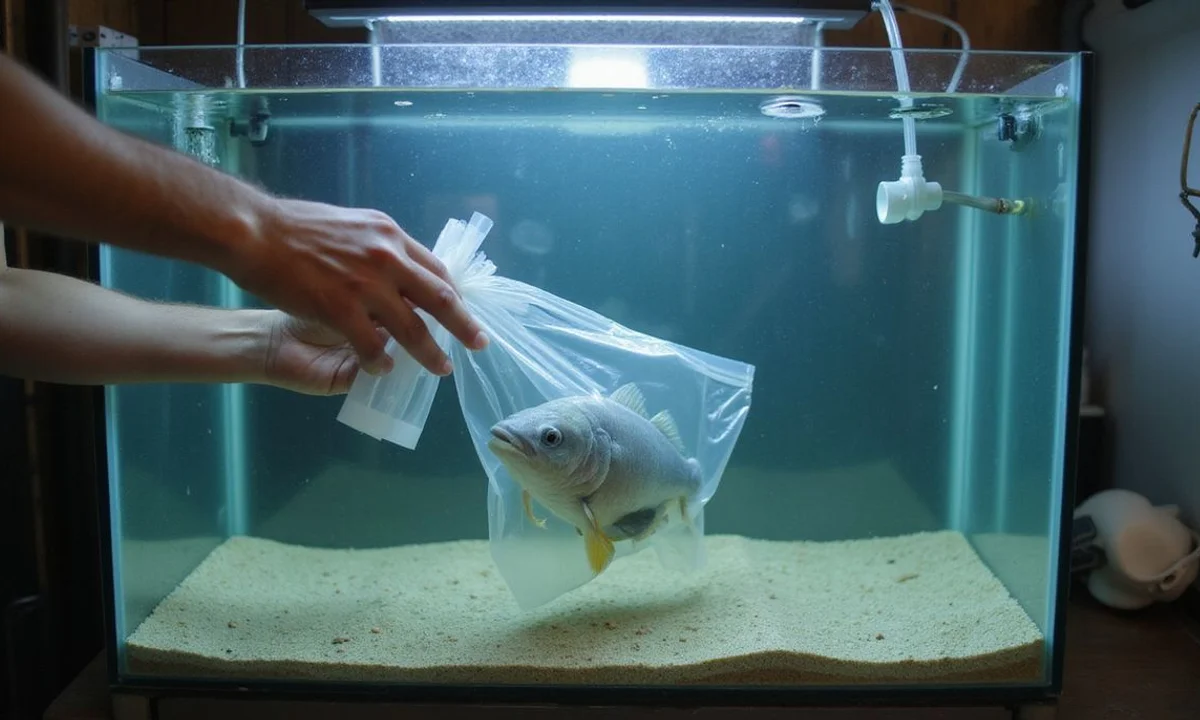
Marine fish die rapidly from osmotic shock when exposed to sudden shifts in temperature, salinity, and pH. We know that a fish sitting in a shipping bag for 30 minutes will develop a drastically different pH from your display tank. Dumping that animal straight in without acclimation causes severe trauma, leading to death within hours.
Our team uses a strict drip method to match the water chemistry slowly.
Acclimation Warning Signs
A poorly acclimated fish might look perfectly fine for the first few hours. We usually notice their breathing rate climbing rapidly just before they stop swimming entirely. Death typically occurs within 24 to 48 hours of arrival.
The Drip Method Solution
Drip acclimation requires patience and a simple siphon setup. We recommend using a dedicated kit with a control valve to manage the flow rate precisely.
- Float the closed bag for 15 minutes to match the temperature first.
- Start a slow drip of tank water into the bag to balance salinity and pH.
- Maintain this process for 60 to 90 minutes minimum.
- Extend the drip time to two hours for highly sensitive species like wrasses and anthias.
Read acclimating new saltwater fish: the drip method for step-by-step instructions.
Cause 3: Incompatible tankmates and stress
Aggressive territorial disputes and bullying are common reasons new fish waste away or die shortly after introduction. We often see homeowners add a new tang into a system with an established tang of the same species. The established fish will relentlessly attack the newcomer, stressing it to the point of starvation or death.
Our maintenance crews also see aggressive residents force peaceful newcomers into hiding until they waste away.
Compatibility Signs and Prevention
A stressed newcomer will hide immediately, refuse all food, and breathe very fast. We look for established fish actively chasing or nipping the fins of the new arrival. Preventing this requires careful stocking compatibility planning.
We advise adding similar-temperament fish only and planning your total livestock list in advance. When introducing a fish to a mature tank, rearrange the rockwork slightly to disrupt established territories.
Our favorite insider trick is using an acrylic isolation container, like the Eshopps Tanklimate Acclimation Box. This hangs inside your main tank and allows the established fish to view the new arrival through a barrier for three days, dramatically reducing aggression upon release. You should also add the new fish right at lights-out so they have a chance to find hiding spots while the tank sleeps.
Cause 4: Parameter swings
Wild fluctuations in water chemistry stress marine life far more than stable parameters sitting at slightly incorrect values. We find that a tank drifting daily between 1.022 and 1.026 specific gravity causes lethal stress over time. Consistent monitoring of four major parameters prevents gradual, unexplained fish loss.
Our reef experts track these critical metrics weekly to prevent tank crashes.
Essential Parameter Guidelines
| Parameter | Target Range | Critical Warning |
|---|---|---|
| Salinity | 1.024 - 1.026 SG | Swings greater than 0.001 per day cause severe stress. |
| Temperature | 76°F - 80°F | Keep daily fluctuations under 1°F. |
| Alkalinity | 8 - 10 dKH | Sudden drops lead directly to coral tissue necrosis. |
| Ammonia/Nitrite | 0 ppm always | Any reading indicates a failing biological filter. |
Signs of parameter swings include fish dying gradually over several weeks and corals receding from their bases. We also look for a generally sluggish, unhappy tank environment. Prevention starts with performing weekly 10% to 15% water changes using perfectly matched salinity.
Our top recommendation for stabilizing salinity is installing an Auto Top-Off system, such as the Tunze Osmolator 3155. This sensor automatically replaces evaporated aquarium water with fresh water, completely stopping the daily salinity spikes that stress out delicate marine life.
Cause 5: Source disease
Untreated parasites and bacterial infections from chain pet stores are the primary cause of sudden disease wipeouts. We trace many mysterious fish deaths back to retailers that receive livestock from wholesalers and place them immediately onto the sales floor. Highly contagious diseases like Marine Velvet or Cryptocaryon irritans easily slip through these systems and right into your display.
Our diagnostic team frequently encounters these devastating outbreaks.
Recognizing and Stopping Parasites
Infected fish develop white spots resembling salt grains within a week of arrival. We then see other tank residents show similar symptoms shortly after, followed by sudden deaths in fish that had lived peacefully for years. The absolute best prevention is buying from a specialty shop with a real quarantine protocol.
Our strict two-week quarantine process utilizes medications like Copper Power to catch and eliminate these infections before the fish ever reaches your home. Many advanced reefers prefer to run an additional 4-week quarantine at home for total safety.
If Marine Ich does breach your main display, treating it requires leaving the tank completely fishless for a grueling 76-day fallow period to starve the parasite out entirely.
Bring a sample, narrow it down
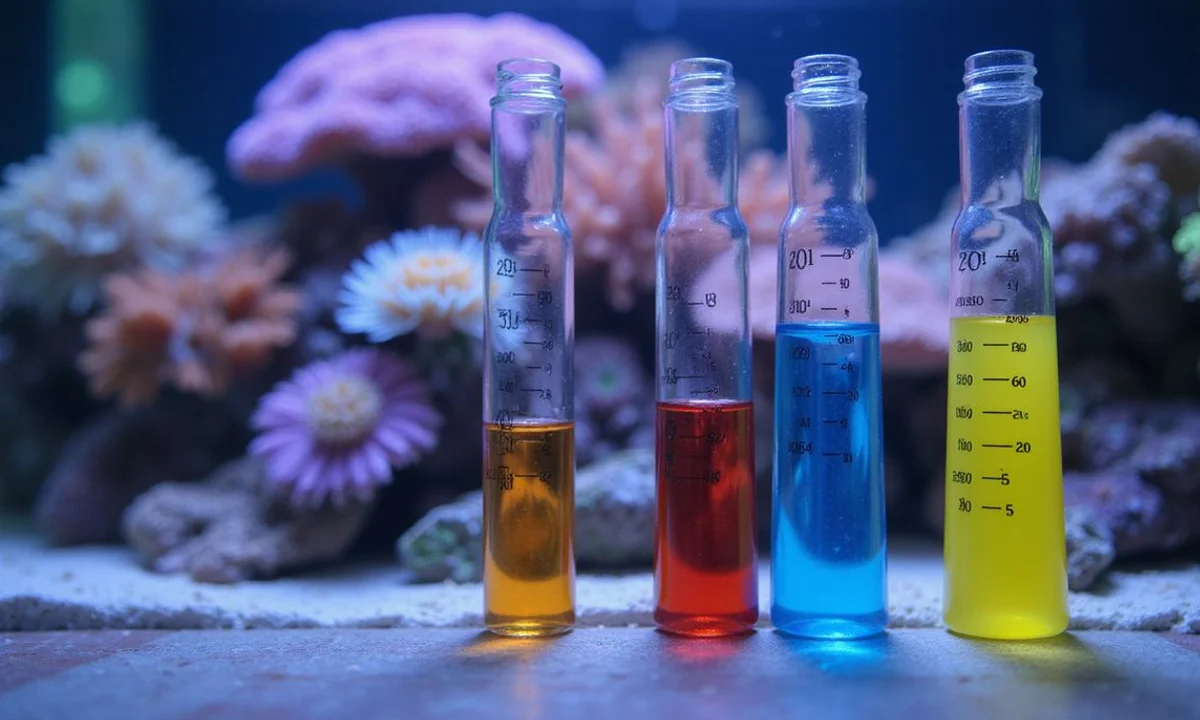
Testing the water provides a clear answer for most instances of saltwater fish death. We run free in-store testing on saltwater samples to check salinity, calcium, alkalinity, magnesium, phosphate, and nitrate. That single ten-minute process covers 80% of the diagnosis immediately.
Our experts will walk through the results with you directly. If the parameters check out perfectly, the issue usually points to poor acclimation, aggressive tankmates, or a hidden source disease. The goal is figuring out exactly what to change before you bring the next fish home.
Frequently Asked Questions
Why did my fish die after just one day?
Usually acclimation shock or an uncycled tank — both preventable, both common. If the fish came from a chain store with no quarantine, source disease is also a strong candidate.
Can a single sick fish kill my whole tank?
Yes. Ich and velvet spread fast in a closed system without quarantine. One infected fish in a five-year-old reef can wipe out every fish in the tank within a week.
Does test-strip water testing tell the whole story?
Not really. Drop tests like Salifert and Hanna are far more accurate than strips, especially for saltwater parameters where small differences matter. We use drop kits for free in-store testing.