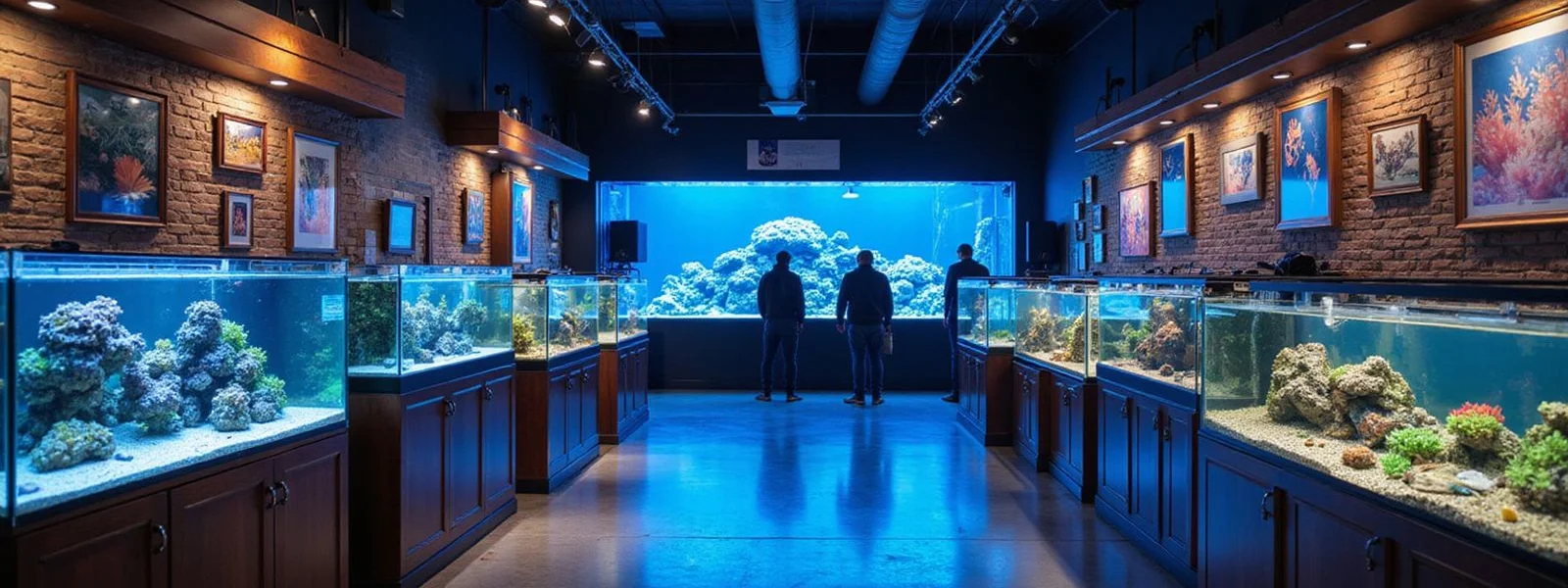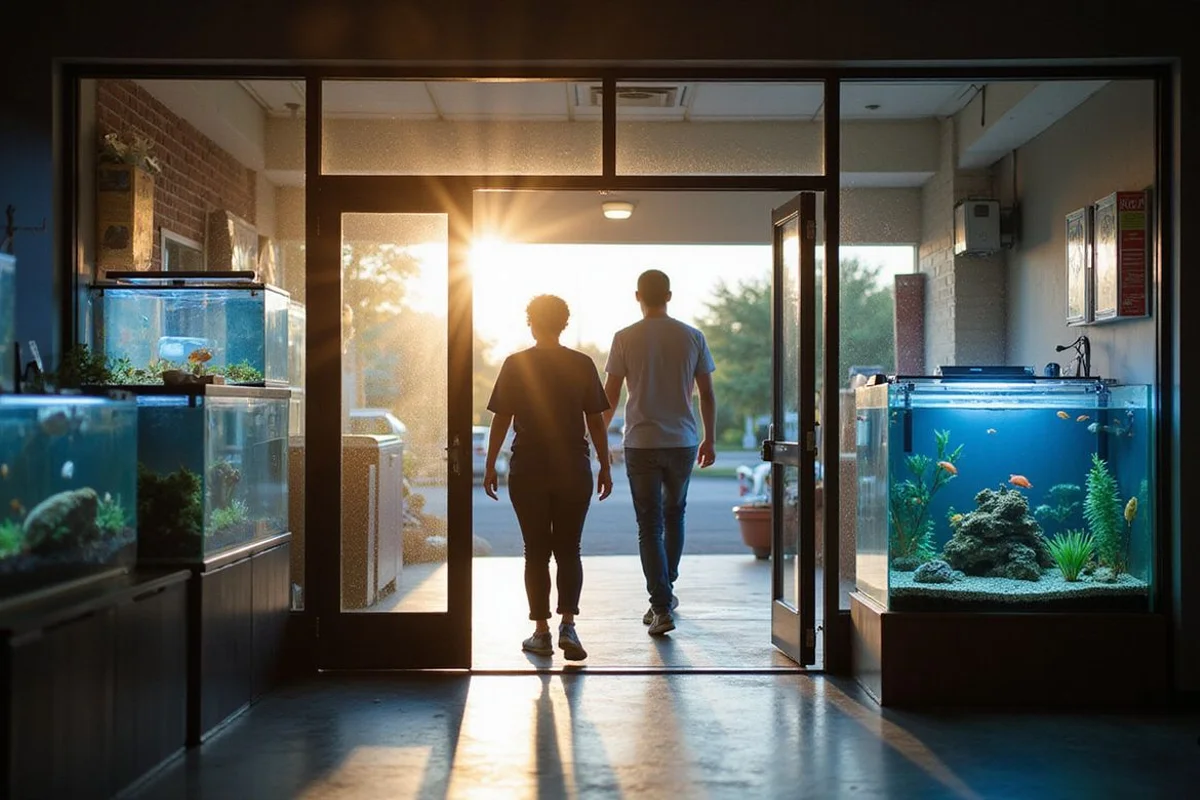
Walking into a specialty aquarium store in Sarasota for the first visit can feel like stepping into a marine biology lab. Many homeowners and business owners expect a standard pet shop experience, only to find complex filtration systems and high-end coral frag tanks.
We know that transition is sometimes overwhelming. The Gulf Coast Aquatics team built this space to bridge the gap between a simple hobby shop and a serious operation.
Let’s break down exactly what you will see, what you need to bring, and how to prepare for a successful tank build.
The store layout
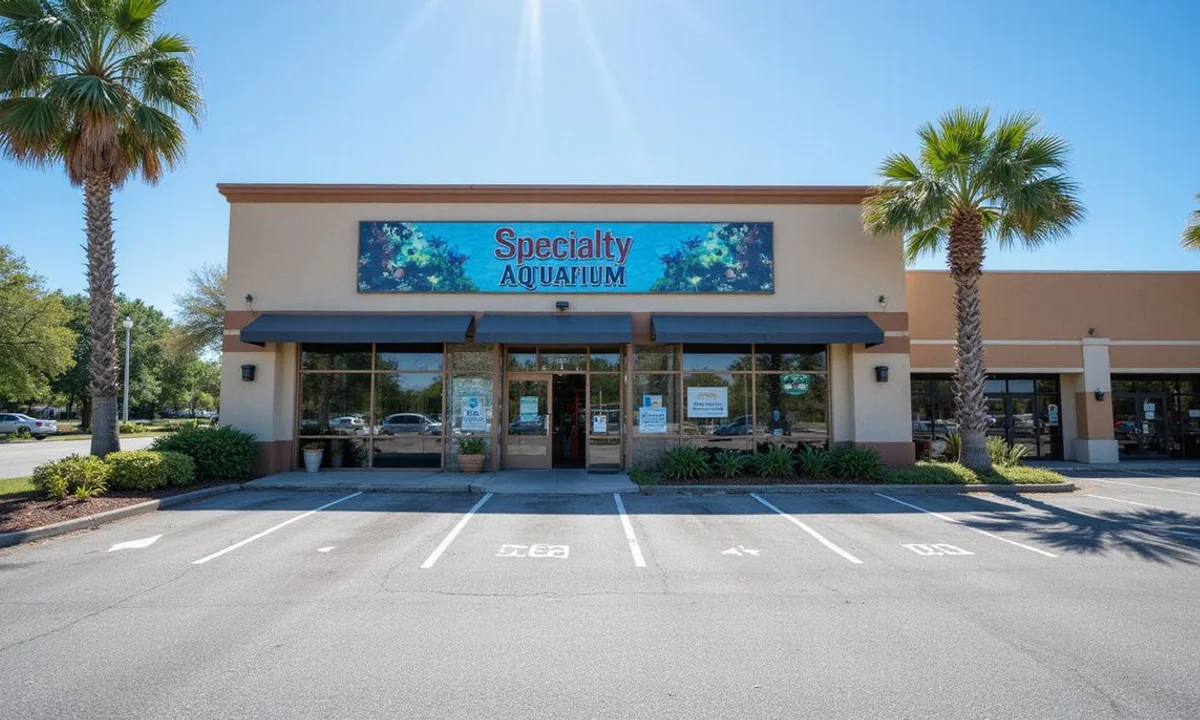
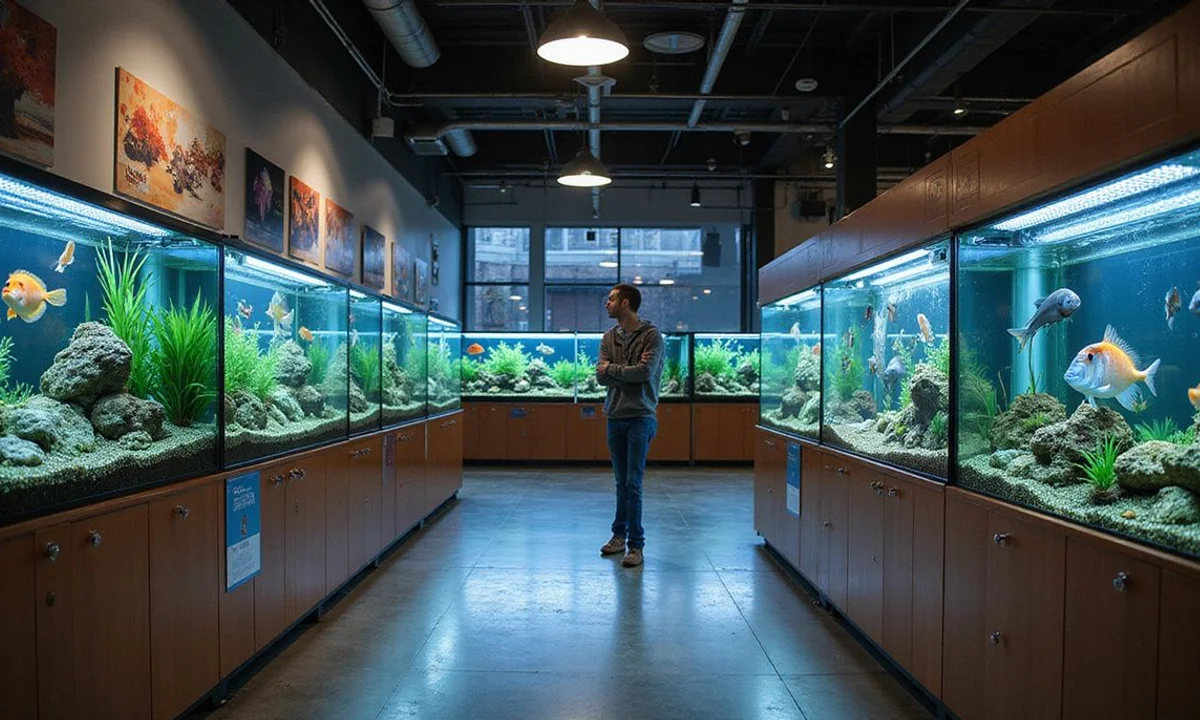
The store sits right on Bee Ridge Road in Sarasota, featuring a dedicated free parking lot directly out front. The immediate space past the front doors houses our massive freshwater section. This area includes a wall of planted community tanks on the right, betta cubes and oddball species to the left, and specialty plecos at the back.
Walking past the freshwater wall reveals our comprehensive equipment aisle. You will find premium life-support gear here, including canister filters from Fluval, high-output lighting systems like EcoTech Radions, and premium Seachem water care products. Continuing through the aisle leads directly into the dedicated saltwater and coral room at the rear of the building.
This isolated marine space runs on an independent filtration loop to maintain pristine water parameters. The coral frag racks are carefully organized by category to make selection easy.
- SPS (Small Polyp Stony): High-light, high-flow corals like Acropora and Montipora.
- LPS (Large Polyp Stony): Flowing, colorful options like Torches, Hammers, and Frogspawn.
- Soft Corals: Excellent starter options such as Zoanthids and Leather corals.
We structured the entire floor plan to let you browse at your own pace without feeling shadowed. Staff members usually maintain the saltwater room or stock the equipment aisle, so help is always visible when you need it.
What to bring
For the most productive first time fish store visit, you need to bring a water sample, a tank photo, and a current equipment list. This preparation turns a casual browsing trip into a concrete planning session. Our team can diagnose complex issues much faster when we have the right data in hand.
- A water sample. Bring at least one cup of aquarium water in a clean, soap-free container. We test your water for free using professional photometric equipment, which is far more accurate than home test strips. The full freshwater panel checks ammonia, nitrite, nitrate, pH, and GH/KH. Saltwater tests cover salinity, calcium, alkalinity, magnesium, and phosphate. The entire process takes roughly 10 minutes.
- A photo of your tank. A quick smartphone photo provides massive context for our staff. This visual helps identify equipment placement, aquascape flow, current livestock compatibility, and any visible algae issues. Catching a localized cyanobacteria outbreak early saves significant money on chemical treatments later.
- A list of current livestock and equipment. Document your exact tank dimensions, filter brand, lighting schedule, and heater wattage. Writing down your current fish and coral species prevents those frustrating memory lapses mid-conversation. You want to avoid accidentally mixing aggressive cichlids with peaceful community tetras.
Starting completely from scratch requires a different set of numbers. Bring rough measurements of your intended floor space, an idea of the floor’s weight tolerance, and a realistic budget for life support gear. See setting up your first freshwater aquarium for a detailed look at how that initial conversation works.
Questions we’ll ask
Expect to answer specific questions about your tank size, running time, current inhabitants, equipment, and overall goals. These details directly dictate which fish and corals will thrive in your environment.
We never ask these questions to test your knowledge. The answers form the baseline for every single recommendation a good shop makes.
| Standard Question | Why The Answer Matters |
|---|---|
| What size is your tank? | Determines maximum biological load and swimming space. |
| How long has it been running? | Indicates if the nitrogen cycle is fully established (usually 4 to 6 weeks). |
| What is currently living in it? | Highlights potential aggression, dietary conflicts, or bioload limits. |
| What equipment do you use? | Shows if your filtration and lighting can support more demanding species. |
| What is your ultimate goal? | Helps map out a long-term stocking and upgrade sequence. |
A 75-gallon system with an oversized canister filter running for six months can easily handle livestock that would crash a brand-new 20-gallon setup. Stocking a dense, CO2-injected planted community tank requires entirely different parameters than a rocky African Mbuna cichlid environment. Getting the complete picture upfront prevents costly livestock losses down the road.
How long the visit takes
Quick supply runs take 10 to 15 minutes, while planning a new system or buying fish can take anywhere from 30 to over 60 minutes. Proper livestock selection and water testing simply require dedicated time.
We recommend building a buffer into your schedule so you never feel rushed.
- Quick Supply Runs (10 to 15 minutes): Ideal for grabbing fish food, picking up replacement filter media, or a rapid water test.
- Single Fish Purchases (20 to 30 minutes): This window allows time for water testing, catching the fish safely, and explaining the proper drip acclimation process.
- Initial Stocking Consultations (45 to 60 minutes): We break down your tank capacity, map out a safe stocking sequence, identify equipment gaps, and establish a maintenance routine.
- Custom Reef Planning (60+ minutes): Planning a high-end marine build for a home or office involves complex plumbing design, flow dynamics, and coral placement strategies.
Traffic inside the shop peaks on Saturday afternoons and Sunday mornings. Weekday mornings or late Sunday afternoons offer a much quieter environment. Those off-peak hours are ideal if you want a long, uninterrupted conversation about a complex installation.
No appointment needed
You can walk in without an appointment any time during our normal operating hours. The store is open Monday through Saturday from 10am to 6pm, and Sunday from 12pm to 5pm. You are always welcome to browse the displays or get your water tested without making a purchase.
The shop is located at 2847 Bee Ridge Road, Sarasota, FL 34239. This central location sits right on the Bee Ridge corridor, making it highly accessible from Interstate 75. Free parking is readily available right in front of the building.
- From Lakewood Ranch: Expect a 20 to 25-minute drive depending on I-75 traffic.
- From Bradenton: Plan for 25 to 30 minutes via US-301 South.
- From the Keys: Visitors from Siesta Key or Longboat Key usually reach us in under 20 minutes outside of peak tourist season.
Our regular customer base spans Sarasota proper, the barrier islands, and the expanding eastern suburbs. Drop by whenever you are ready to talk tanks.
Ready to start your aquarium journey?
Knowing what to expect aquarium store visits to entail removes the guesswork from building a thriving aquatic ecosystem. Our staff is ready to help you manage the process, whether you are running a small desktop betta tank or a massive commercial reef display.
Gather your water sample, snap a quick photo of your setup, and drive over to the shop this week.
We look forward to seeing your project come to life.
Frequently Asked Questions
Do I need an appointment?
No. Walk in any time during store hours (Mon-Sat 10-6, Sun 12-5) and we'll help you whenever you arrive. Free parking on site.
Can I just look without buying?
Yes. We have 120+ display tanks and a dedicated coral room — browsing is encouraged. No pressure to buy.
Is the saltwater section really separate?
Yes. A dedicated saltwater and coral room at the back of the store with its own lighting and filtration, separate from the freshwater wall.