We often see the same cycle play out when a beautiful tank crashes. The culprit usually boils down to a handful of common fish diseases aquarium owners overlook.
Our team knows from experience that understanding how these pathogens spread changes everything. A real quarantine protocol breaks the chain of infection before it starts.
We want to help you avoid the losses that force so many people to quit.
Let’s look at the specific symptoms and exact treatments required for each major illness.
Marine ich (Cryptocaryon irritans)
Our experience shows marine ich is a parasitic infection that causes salt-like white spots and requires immediate copper treatment. This ciliated protozoan is the single most common saltwater disease you will encounter.
We often notice early warning signs like fish scratching against rocks or breathing heavily. The parasite follows a complex three-stage life cycle.
- Trophont: The visible spot stage where the parasite attaches directly to the fish.
- Tomont: The reproduction stage where the parasite drops to the substrate to divide.
- Theront: The highly infectious free-swimming stage looking for a new host.
We see this whole cycle run for 6 to 21 days at typical reef temperatures. The spots disappear after a few days when trophonts drop off, but the parasite remains active in the tank.
Our short treatments always failed before we understood this hidden cycle.
Proven Ich Treatment and Prevention
To stop the cycle, move all fish to a quarantine tank and leave the display tank fallow for 76 days. We specifically use chelated copper like Copper Power held at a strict therapeutic level of 2.5 ppm for 30 days.
You must monitor this dosage daily with a digital Hanna Checker HI702 colorimeter. A second option is hyposalinity at a 1.009 specific gravity for six weeks.
A mandatory two-week quarantine catches infections before they reach an established tank. We apply prophylactic copper immediately for known carrier species like tangs, anthias, and butterflies.
Marine velvet (Amyloodinium ocellatum)
Marine velvet is a lethal dinoflagellate parasite that forms a dust-like coating and can wipe out a tank in 48 hours. We consider this pathogen faster, smaller, and far more deadly than marine ich.
The dust-like coating is usually most visible when you shine a flashlight against a dark background. We also watch for labored breathing and erratic swimming right before sudden death.
A severe velvet outbreak completes its life cycle in just 4 days and can kill every fish in a reef tank inside a week.
| Feature | Marine Ich | Marine Velvet |
|---|---|---|
| Appearance | Distinct white salt grains | Fine gold or white dust |
| Life Cycle Speed | 6 to 21 days | 4 days |
| Lethality | Moderate to high | Extremely high |
We treat velvet using the same methods as ich, but timing is absolutely critical. By the time you see the physical symptoms, the fish are already dying.
Our standard intervention requires immediate copper treatment in an isolation tank. This fast-moving disease is the single best argument for never adding an unverified fish to a display reef.
We enforce a strict quarantine process to block this exact pathogen.
Brooklynella
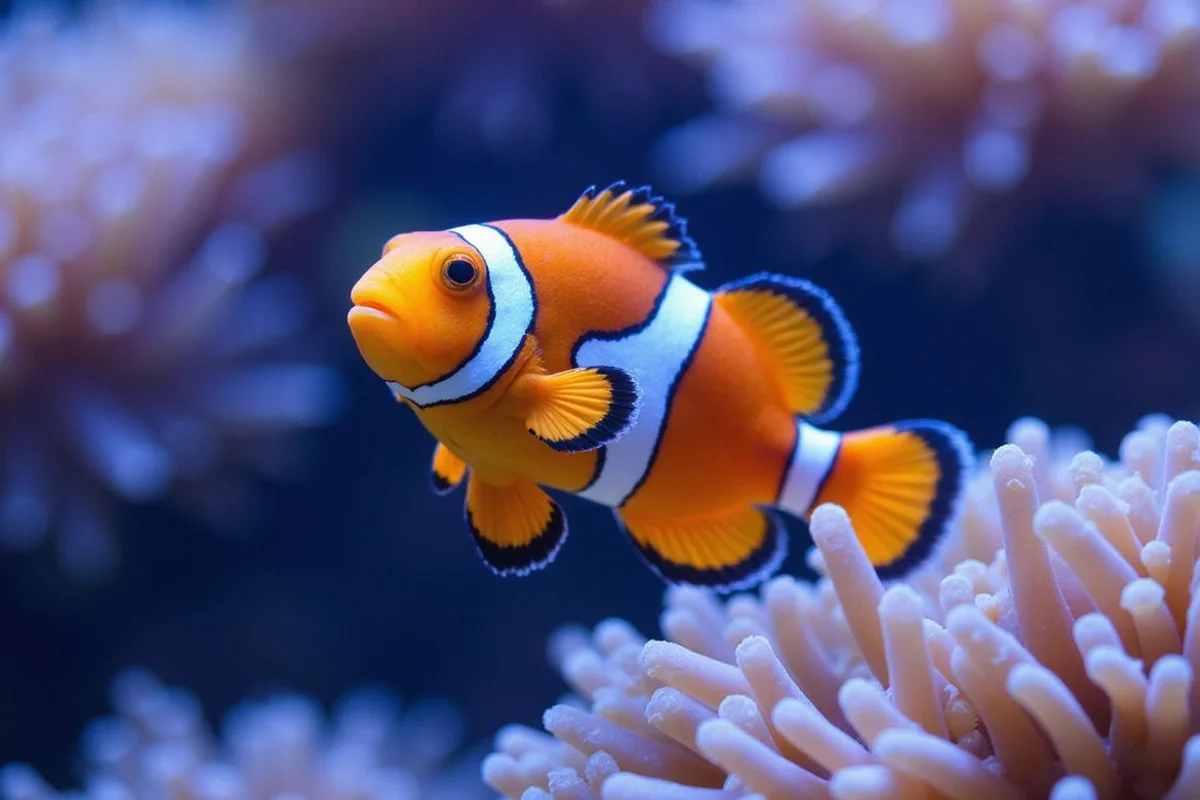
Brooklynella is an aggressive ciliated protozoan known as “clownfish disease” that causes an excess, thick slime coat. We frequently see wild-caught and some captive-bred clownfish arrive carrying this infection.
Affected fish hang near the water surface or powerheads while refusing food and breathing rapidly. Our records indicate that the fatality rate is near 100% without immediate intervention.
The parasite attacks the gills and skin to suffocate the host quickly.
Treating and Preventing Brooklynella
We rely on a strict schedule of formalin baths using a 37% formaldehyde solution to clear the infection. The targeted chemical bath is the proven cure over milder options like hyposalinity.
Our quarantine system holds new clownfish for much longer than the standard two weeks because of this specific risk.
Pro-Tip: Brooklynella can survive in a tank environment even without fish, so you cannot just starve it out by going fallow like you can with ich.
We use this extended isolation period to guarantee the fish is completely clean before release.
Marine flukes (gill flukes and body flukes)
Marine flukes are flatworm parasites that attach to a fish’s body or gills and are often completely invisible at first. We diagnose this issue when fish scratch against rocks, breathe heavily, or develop severely reddened gills.
Copper medications will not touch flukes, so you need a targeted dewormer. Our treatment plan follows two non-negotiable steps to clear the infection.
- Initial Bath: A 30 to 45-minute formalin dip at therapeutic concentrations immediately upon arrival.
- Follow-Up Treatment: Successive Prazipro doses spaced 5 to 7 days apart to destroy newly hatched eggs.
This aggressive timeline breaks the reproduction cycle completely. We dose Prazipro prophylactically in quarantine to guarantee every hidden flatworm is eradicated.
A standard observation period catches these fluke loads before fish ever enter your main system.
Freshwater ich (Ichthyophthirius multifiliis)
We treat freshwater ich similarly to the marine version because it belongs to the same protozoan family and has a matching life cycle. The infection presents as distinct white spots that look exactly like grains of salt.
Our team mostly sees outbreaks after sudden temperature swings, such as a heater failure or a cold water change. Adding unquarantined fish directly to a community tank is another classic trigger.
Heat and Salt Treatment
We recommend attacking the parasite’s life cycle using a combination of temperature and targeted dosing. You can choose the best intervention based on the hardiness of your livestock.
| Treatment Method | Application Details | Safe For |
|---|---|---|
| Heat Therapy | Raise temp to 86°F for 14 days | Most tropical fish |
| Aquarium Salt | 1 tbsp per 3 gallons | Hardier, scaled species |
| Malachite Green | Dose for 10 to 14 days | Tanks where salt is unsafe |
Our baseline salt dosage must be avoided for scaleless fish and delicate shrimp. Proper quarantine for new freshwater additions prevents the pathogen from taking hold.
We strongly advise checking equipment regularly to avoid heater failures and shock-cooling events during water changes.
Bacterial infections (fin rot, columnaris, dropsy)
Bacterial issues usually surface as a secondary complication to poor water quality or severe stress. We classify these aquarium fish disease cases into three primary visual categories.
- Fin Rot: Shows up as ragged or rapidly whitening edges on the fins.
- Columnaris: Often called “saddleback,” marked by a distinct grey-white patch on the body.
- Dropsy: A severe internal bacterial infection causing fluid buildup and pinecone-like scale lifting.
You must always address the underlying water chemistry before adding any medication. We isolate sick fish immediately to stop the spread.
Antibiotics like Maracyn or Kanamycin are necessary for established cases. Our medication of choice for stubborn gram-negative bacteria is Kanaplex.
Stable water parameters and strict stocking limits keep immune systems strong. We rely on regular water changes to create an environment where harmful bacteria cannot easily multiply.
Why prevention beats treatment
Treating a display tank for any of these pathogens is both expensive and traumatic. We see restocking costs for a mid-range 50-gallon setup easily reach $1,500 to $3,000 in the US market today.
These aggressive medications cause massive collateral damage to established ecosystems. We regularly observe three major side effects from dosing a display tank:
- Copper kills corals and valuable invertebrates instantly.
- Heavy antibiotics disrupt the biological filtration cycle.
- Surviving fish often remain immunocompromised for weeks.
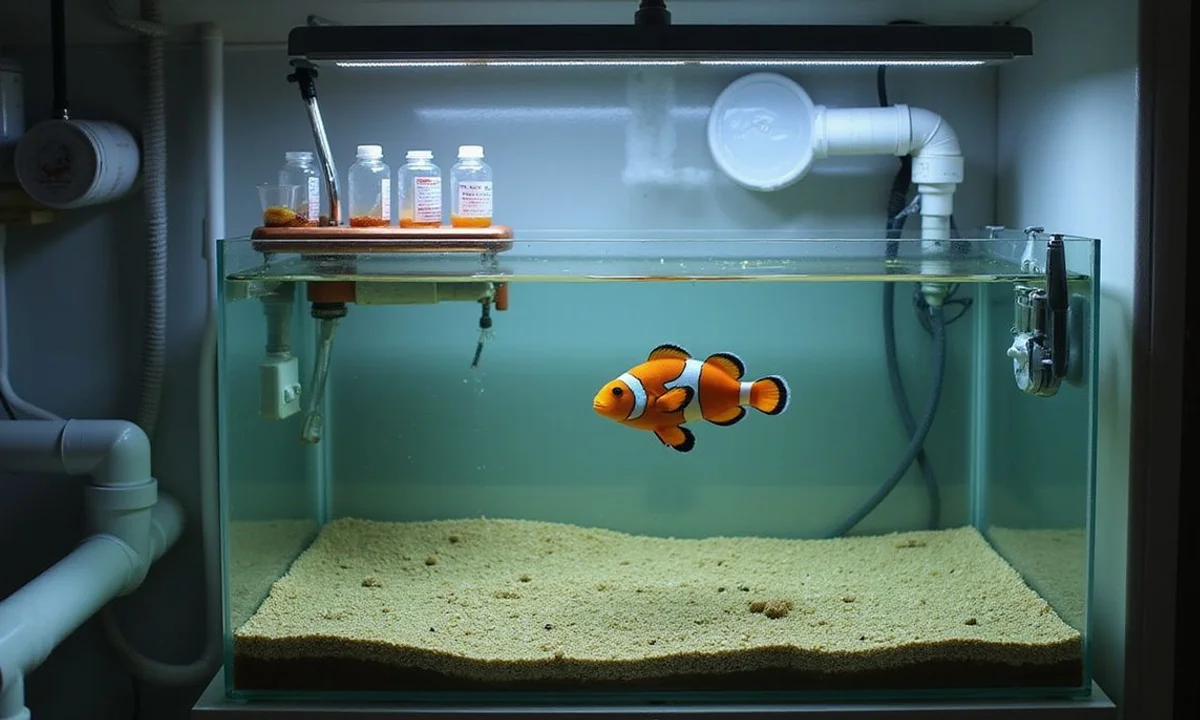
A dedicated quarantine setup prevents almost all of these disasters.
We catch and treat the fish carrying a disease in our isolated system before it ever touches your water. The true cost of holding a fish for two weeks instead of two days is absorbed by the shop, saving your tank from ruin.
We explain this process further in our guide on why we quarantine every fish. If you need help diagnosing an aquarium fish disease in your own setup, come in with a water sample and a clear photo.
Our experts will work right alongside you to build a safe recovery plan.
Frequently Asked Questions
Can I treat my display tank for ich?
In a fish-only tank, yes — copper or hyposalinity work but require continuous monitoring. In a reef tank, no — copper kills corals and most invertebrates. The standard reef approach is to remove all fish to a separate quarantine tank for treatment and run the display fallow (no fish) for 76+ days.
How long does ich treatment take?
Plan on 4-6 weeks of copper or hyposalinity in a quarantine tank to fully break the ich life cycle. Shorter treatments leave latent trophonts that re-emerge weeks later.
Are some species more disease-prone?
Yes. Tangs, anthias, butterflies and wild-caught angels are notoriously susceptible to ich and velvet. We extend quarantine on these species and often pre-treat with copper as a precaution.