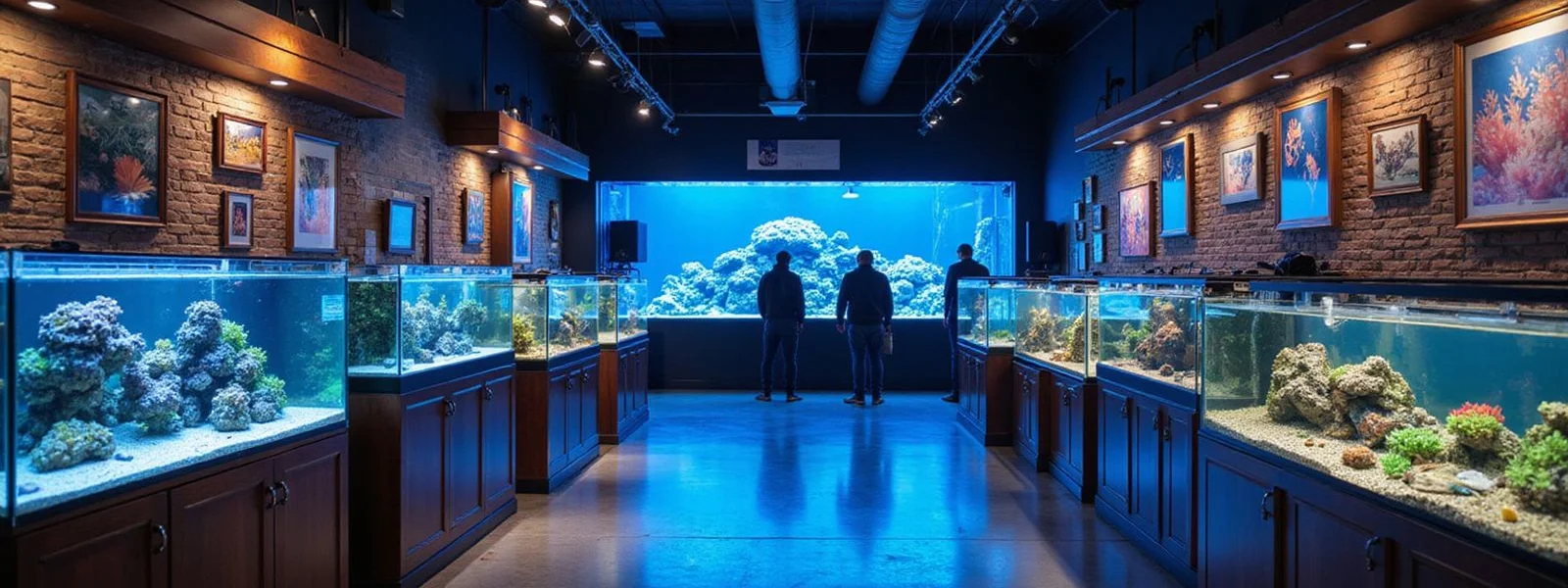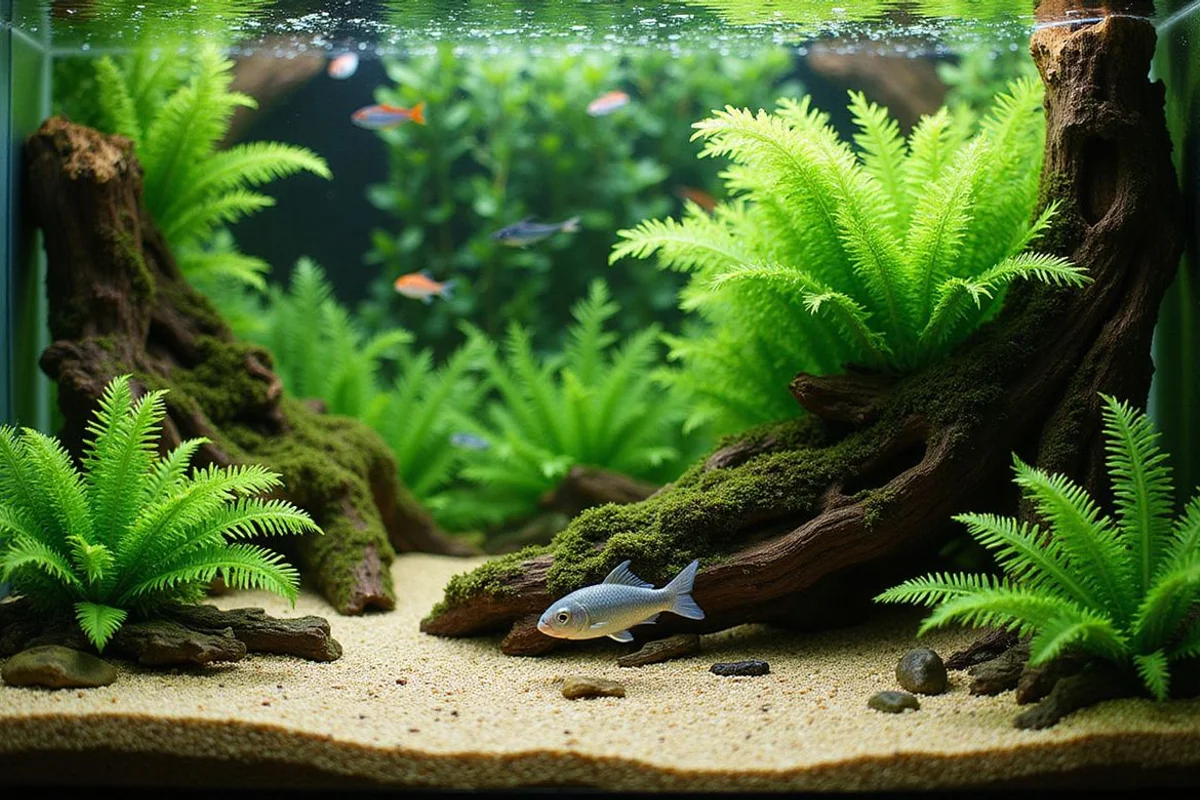
We have learned from hundreds of tank installations that a peaceful community tank is the result of planning, not luck. Most beginners assume compatibility just means fish will not eat each other.
Our team approaches this differently by matching environmental needs to reduce stress.
This specific community tank stocking guide gives the framework we use to plan stocking at Gulf Coast Aquatics, complete with ready-made combinations by tank size. If you are still picking your first species, pair this with our best beginner freshwater fish guide.
The three rules
Get these foundational principles right before you buy a single fish. The rest of your aquarium setup usually falls into place naturally.
Rule 1: School schooling fish properly
We always explain that tetras, rasboras, danios, and corydoras are biologically wired to find safety in numbers. Studies consistently show that isolated schooling fish experience chronic spikes in cortisol, which is their primary stress hormone. A single neon tetra is a highly stressed fish that hides constantly and dies young.
You need a minimum of six fish of the exact same species to ensure normal behavior. Mixing different tetra species does not fix the schooling problem because they school by species, rather than category.
The minimum grouping requirements for common species include:
- Tetras (neon, ember, cardinal, rummynose): 6+ same species
- Rasboras (harlequin, chili, lambchop): 6+ same species
- Danios (zebra, leopard): 6+ same species
- Corydoras: 4+ same species (5-6 ideal)
- White cloud mountain minnows: 6+
Rule 2: Balance the water column
Our most successful client tanks spread fish evenly across three distinct swimming zones. Overcrowding one specific level depletes dissolved oxygen in that area while leaving the rest of the tank empty. For example, a standard 29-gallon tank measures 30 inches long and 18 inches high. Placing 12 mid-water fish in that space without top or bottom dwellers looks crowded and unbalanced.
You can create a highly active display without stressing your livestock by splitting that same number of fish across all three zones.
Fish naturally occupy specific areas of the aquarium:
- Top (surface): hatchetfish, honey gourami, swordtails, livebearers
- Middle (mid-water): tetras, rasboras, danios, barbs, dwarf cichlids
- Bottom (substrate): corydoras, kuhli loaches, plecos, dwarf chain loaches
Rule 3: Stick to one temperament category
We strongly advise clients to mix all peaceful fish or all semi-aggressive fish. Mixing different categories almost always fails because the peaceful fish hide while the aggressive ones eat all the food. Water parameters also play a massive role in these compatibility choices. Peaceful South American fish typically need a softer pH around 6.5 to 7.0, while aggressive African Cichlids demand hard water with a pH of 7.8 to 8.6.
These are the main temperament groups you will encounter in US pet stores when planning your freshwater community stocking:
- Peaceful: most tetras, rasboras, corydoras, honey gourami, peaceful loaches.
- Semi-aggressive: most barbs (except cherry barbs), dwarf cichlids, gouramis.
- Aggressive: most cichlids (Africans, large Americans), Oscars, Jack Dempseys.
Stocking by tank size
Choosing the right combination depends entirely on your total water volume. Free digital tools like the AqAdvisor stocking calculator provide an excellent baseline for checking your 2026 aquarium plans.
10 gallons
Our standard 10-gallon setups measure 20 inches long, which offers limited but workable space. This volume is best for a single betta with no tankmates, or a very small micro-community.
Great combinations for a 10-gallon include:
- 5-6 small rasboras (chili, lambchop)
- 3-4 dwarf shrimp (cherry, neocaridina)
- 1-2 nerite snails
20 gallons
We highly recommend buying the 20-gallon “long” model rather than the standard “high” version. The 30-inch length provides a significantly larger footprint for gas exchange and horizontal swimming space.
Classic combos for a 20-gallon tank:
- Tetra + cory + livebearer: 6 neon tetras, 4 panda corydoras, 3 platies
- Rasbora + cory + centerpiece: 6 harlequin rasboras, 4 sterbai corys, 1 honey gourami
- Peaceful nano: 8 ember tetras, 6 amano shrimp, 4 pygmy corys
29-30 gallons
Our installation team considers this volume the sweet spot for first-time community tank owners. You will need a reliable hang-on-back filter, like the AquaClear 50, to handle the bioload of a fully stocked 29-gallon system.
Plenty of room allows for these active groupings:
- Classic planted community: 8 ember tetras, 6 corydoras, 1 honey gourami, assorted snails
- Active mid-water: 8 zebra danios, 6 corydoras, 5 cherry barbs (the only peaceful barb)
- South American biotope: 8 cardinal tetras, 6 sterbai corys, 1 dwarf gourami
55-75 gallons
We define this size as the entry point for a full-scale community. Keep in mind that a fully decorated standard 55-gallon tank weighs around 600 pounds, so you must verify your floor joists can handle the load.
This size supports multiple schools, larger centerpiece species, and real bottom-dweller groups:
- Mixed community: 12 cardinal tetras, 8 harlequin rasboras, 6 corydoras, 1 angelfish or 1 dwarf gourami
- Africa biotope (different rules): 6-8 Mbuna cichlids in a dedicated species tank only. Never combine these with a standard community.
- South American: 10 rummynose tetras, 6 sterbai corys, 1 angelfish, 2 dwarf cichlids
75+ gallons
These expansion sizes are where larger centerpieces finally make sense. A tank of this magnitude requires heavy-duty filtration, often a large canister filter like the Fluval FX4, to keep the water clear.
Options for large-scale setups include:
- Multiple schools of 8-10 fish each
- A pair of angelfish or a single oscar (requires changing the entire stocking approach)
- Larger corydoras, bristlenose plecos, and larger schooling species
Classic mistakes to avoid
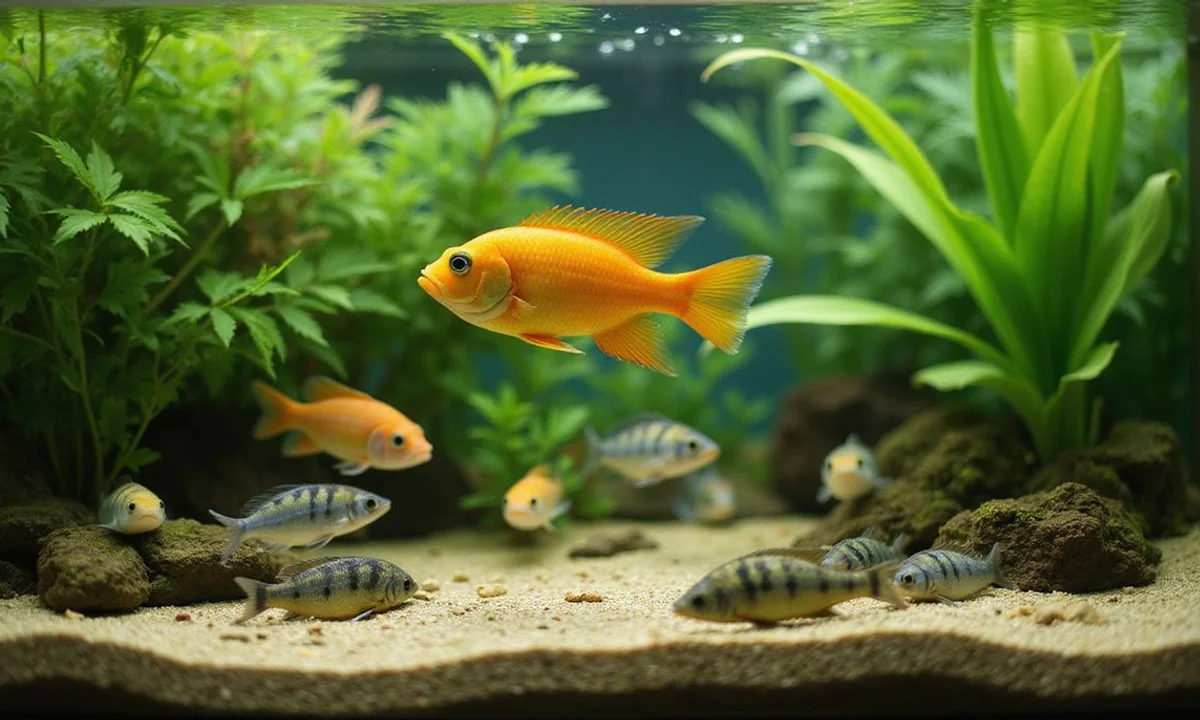
We see the same compatibility errors repeatedly in the field when people ignore a proper tank mate guide. Many beginners in 2026 buy fish based entirely on appearance without researching adult sizes or preferred water temperatures.
Here is a quick breakdown of the most frequent physical mismatches:
| The Mistake | The Reality | The Solution |
|---|---|---|
| Common Pleco in a 20-gallon | The Hypostomus plecostomus reaches 15 to 24 inches long. | Choose a Bristlenose Pleco, which maxes out at 5 inches. |
| Single Angelfish + Neons | Adult angels grow large enough to swallow neon tetras whole. | Keep angelfish with deeper-bodied species like Corydoras. |
| Goldfish + Tropical Fish | Goldfish thrive at 68-74°F. Tropical fish need 78-82°F. | Keep goldfish in dedicated, unheated species tanks. |
Behavioral and chemical mismatches to avoid:
- Tiger barbs in a peaceful community: These nippy fish will harass slow-moving species like gouramis or bettas until those fish hide and starve.
- Keeping a single corydoras: Cory cats are highly social animals that require a minimum group of four to six to feel secure.
- Mixing African and South American cichlids: This forces a terrible water chemistry compromise. Both species remain unhappy in neutral water, and the high aggression of African species usually dominates the tank.
- Two male bettas: Never place two males in the same enclosure. They will fight until one is severely injured or killed.
How to handle additions to a mature tank
Our installation crews take special precautions when introducing new livestock to an established ecosystem. A simple 10-gallon bare-bottom quarantine tank with a sponge filter works perfectly for this exact purpose. Treating newcomers with a broad-spectrum preventative like Seachem ParaGuard greatly reduces disease transmission.
Follow these specific steps to safely add new fish:
- Quarantine new fish for 2 weeks before adding them to your main display. This allows you time for observation and treating anything that develops.
- Rearrange the hardscape slightly before adding newcomers to disrupt existing territories.
- Add fish at lights-out so the new arrivals have a chance to find hiding spots before the established fish notice them.
- Add multiple fish at once if you are introducing schoolers. A lone newcomer dropped into a 6-fish school of established residents often gets bullied.
- Observe carefully for several days after the transfer, as territorial issues usually show up within the first week.
Planning your stocking with us
We take the guesswork out of building a successful aquatic ecosystem. Bring your tank dimensions, current livestock list, and a water sample for free testing.
Our retail staff uses the industry-standard API Freshwater Master Test Kit to check your ammonia, nitrite, nitrate, and pH levels. Keeping nitrates below 20 ppm is a major benchmark for a healthy community. We will work out a stocking plan that uses 70 to 80% of your tank capacity, which leaves safe room for growth and biological waste.
The consultation process is completely free. Walk in any time during business hours, with no appointment needed. See you at the store.
Frequently Asked Questions
What's a good 20-gallon community stocking?
6-8 small tetras (ember, neon), 4-6 corydoras (panda or sterbai), and either a single centrepiece (honey gourami) or a few snails/shrimp. Bring tank dimensions and we'll fine-tune.
Can I mix African and South American cichlids?
Generally no. They have different water chemistry needs (Africans want hard alkaline water; South Americans want soft acidic), different temperament, and don't naturally encounter each other.
How do I know if my fish are stressed?
Pale colour, hiding, clamped fins, gasping at the surface, refusing food — all warning signs to act on. Sustained stress kills fish over weeks even when nothing visible is wrong.