Recent 2025 APPA data shows that over 11.1 million U.S. households now keep freshwater fish. We know the best beginner freshwater fish for a new tank must be hardy, peaceful, and forgiving.
Getting a school of those established gives you a solid baseline you can build upon.
We actually recommend the specific list below at Gulf Coast Aquatics for first-time hobbyists. Starting with picky or aggressive species turns the first month into a frustrating series of problems. Let’s review the exact starter community fish minimums and what to skip so you get it right the first time.
What makes a beginner fish “beginner”
A true easy freshwater fish must tolerate parameter swings, eat prepared foods, and fit peacefully into a community tank. We look for species that score well on four specific properties to ensure survival during the initial setup.
- Hardy: Tolerates parameter swings and common mistakes, like early ammonia spikes.
- Peaceful: Fits perfectly in a community tank without bullying other residents.
- Eats prepared food: Accepts standard flakes or pellets, requiring no live food.
- Schools or stays solo cleanly: Maintains natural behavior without awkward group dynamics.
Most of the species below meet all four criteria easily. We have thoroughly tested these specific fish in local Sarasota tap water conditions.
Top hardy starter species
Platies
Platies are hardy livebearers that tolerate hard water and come in dozens of color morphs like red, sunset, and Mickey Mouse. We frequently recommend them because they can easily live up to 3 to 5 years in captivity.
A single fish usually costs just a few dollars, making them a very affordable starting point. We find they tolerate Sarasota tap water perfectly.
This local water often runs around 200 to 250 parts per million for hardness, which suits them incredibly well. We suggest picking them up since they will eagerly eat almost anything you offer.
- Tank min: 10 gallons.
- Group size: 3+ (mix of males and females or all males to avoid uncontrolled breeding).
Mollies
Mollies are slightly larger livebearers that thrive in harder water environments. We often stock black mollies because their striking appearance stands out beautifully against green tank plants.
Sarasota tap water is perfectly fine for them without any chemical adjustment. We notice they do best when you keep a ratio of more females than males to reduce chasing.
- Tank min: 20 gallons.
- Group size: 3+ (more females than males).
Neon Tetras
The neon tetra is the classic schooling fish, requiring groups of eight or more to display their vibrant blue and red colors. We consider them slightly less hardy than platies, so they require an established tank that has cycled for at least four weeks.
Breeders produce these fish in massive quantities, meaning newly shipped batches can be sensitive to sudden water changes. We suggest keeping their water parameters slightly acidic, ideally with a pH between 6.0 and 7.5.
- Tank min: 15 gallons.
- Group size: 6+ minimum, 8-10 ideal.
Ember Tetras
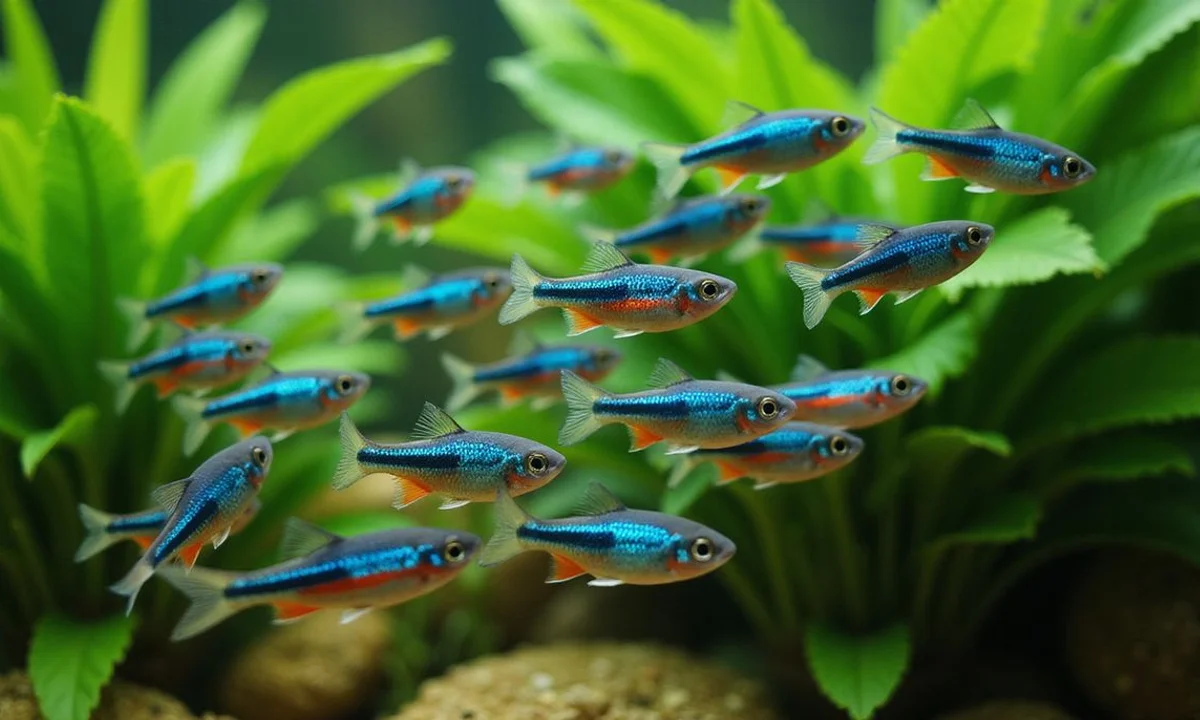
Ember tetras are brilliant orange-red fish that act as a smaller, highly peaceful cousin to the neon tetra. We prefer using them in smaller setups because they max out at just under an inch long.
This tiny footprint allows you to keep a decent school even in a compact tank. We find them incredibly easy to keep once the aquarium finishes its initial biological cycle.
- Tank min: 10 gallons.
- Group size: 6+.
Harlequin Rasboras
Harlequin rasboras are very hardy, copper-and-black schooling fish that actively fill the middle of the water column. We appreciate how readily they accept standard prepared flakes and pellets right out of the bag.
These fish grow significantly larger than ember tetras, often reaching 1.5 to 2 inches in length. We have seen well-cared-for schools easily live between four and six years.
- Tank min: 15 gallons.
- Group size: 6+.
Corydoras (Panda, Bronze, Sterbai, Peppered)
Corydoras are small, peaceful, and social catfish that stay at the bottom of the tank. We always recommend keeping them in groups of at least four to six of the exact same species.
They do an excellent job cleaning up uneaten food that falls to the substrate. We advise using soft sand instead of sharp gravel to protect their delicate barbels.
- Tank min: 20 gallons.
- Group size: 4+ of the same species.
Zebra Danios
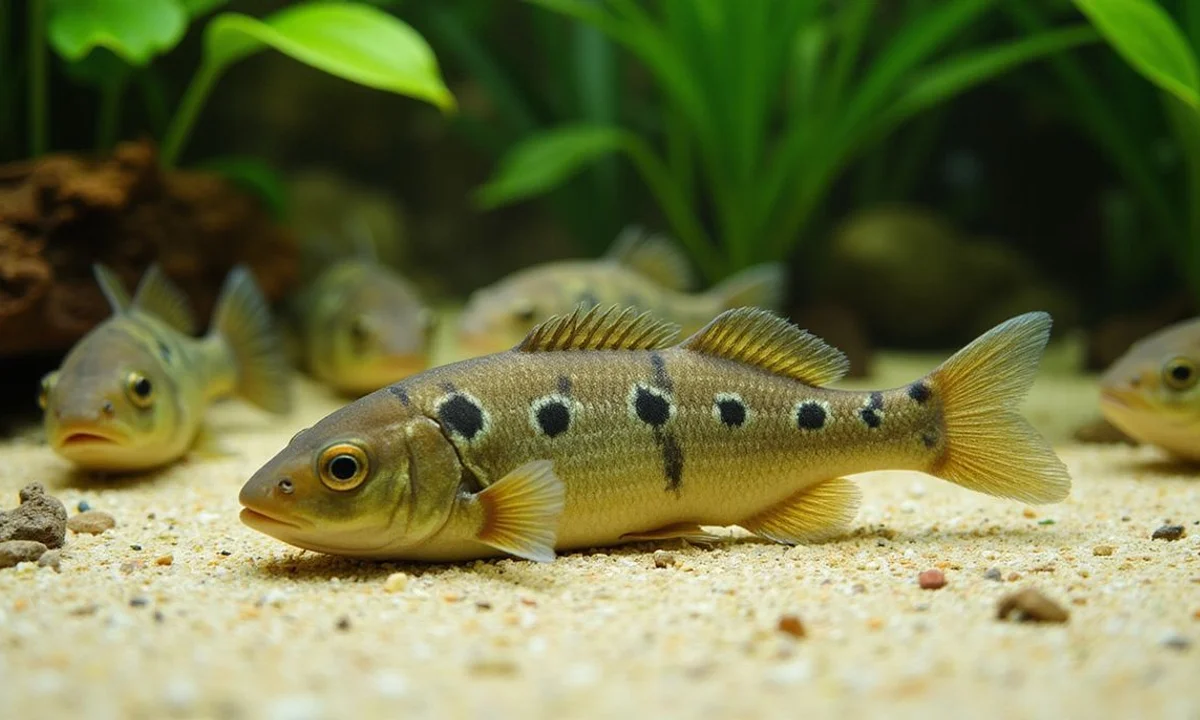
Zebra danios are incredibly fast-moving, active schoolers that boast extreme hardiness. We use them frequently in unheated setups because they comfortably tolerate cooler water down to 64 degrees Fahrenheit.
Their constant motion looks beautiful in a large school, but they can sometimes nip at slower tank mates. We suggest pairing them with equally active fish to prevent any bullying issues.
- Tank min: 20 gallons.
- Group size: 6+.
Guppies
Guppies are hardy livebearers known for the brilliant, varied tail coloration found on the males. We know they adapt exceptionally well to local Florida water conditions right out of the tap.
Females give birth to live fry approximately every thirty days if kept with males. We strongly advise keeping a male-only tank if you want to avoid a massive population explosion.
- Tank min: 10 gallons.
- Group size: 3+ (more females if both sexes, all males to avoid fry).
Cherry Barbs
The cherry barb is a highly tolerant, peaceful species that breaks the stereotype of aggressive barbs. We love the striking visual contrast between the bright red males and the more subdued, brownish females.
Most other barb species have a bad reputation for nipping fins. We can confidently say the cherry barb is a safe, friendly choice for a beginner community.
- Tank min: 20 gallons.
- Group size: 6+.
Honey Gourami
The honey gourami is a beautiful, peaceful surface-dwelling fish that maxes out around two inches long. We often use them as a gentle centerpiece fish alongside schools of tetras or rasboras.
They possess a unique labyrinth organ that actually allows them to breathe air directly from the water’s surface. We recommend keeping them solo or as a single male-female pair, since two males will frequently fight.
- Tank min: 15 gallons.
- Group size: 1-2.
Tank-size minimums
The tank minimums listed above apply to keeping a single species, so you must scale up the volume when mixing groups. We always calculate stocking limits based on the adult size of every fish combined. A typical first community might include a nice mix of the species we just covered.
- 6 ember tetras
- 4-6 panda corydoras
- 4-5 platies
- 1 honey gourami
We know this specific combination works perfectly in a standard 29-gallon aquarium. Squeezing this exact group into a 20-gallon tank is technically doable, but it leaves very little room for error.
Schooling requirements
Most small tetras, rasboras, danios, and corydoras require a group of six or more to behave normally and feel secure. We constantly see lone schooling fish hide in the corner, refuse to eat, and eventually die young due to a compromised immune system.
This is a common situation where typical chain pet store advice falls completely short. We hear employees say you can buy one of each type, which sounds fun but often leads to disaster.
| Fish Type | Minimum School Size | Behavior if Kept Solo |
|---|---|---|
| Tetras | 6+ | Hides, loses color, stops eating |
| Corydoras | 4-6+ | Stays motionless, high stress |
| Rasboras | 6+ | Erratic swimming, shortened lifespan |
A lonely fish is a highly stressed fish. We strongly urge you to either buy the proper group size or pick a completely different species.
What to avoid as a beginner
Beginners should strictly avoid large species, aggressive cichlids, and fish with highly specialized water requirements. We see too many new owners buy fish as tiny juveniles without realizing their massive adult size.
- Bala sharks: Get huge (12 inches) and need 6-foot tanks.
- Common plecos: Reach 18 inches and outgrow almost every starter tank.
- Oscars: Get huge (14 inches) and remain highly aggressive and demanding.
- Discus: Look beautiful but remain extremely demanding, requiring soft water under 3 dGH and frequent water changes.
- African cichlids: Belong in a dedicated species tank, not a community setup with peaceful tropicals.
- Goldfish: Require a completely different temperature, produce massive waste, and need a different environment entirely.
How GCA stocks beginner-friendly species
Neons, ember tetras, harlequin rasboras, platies, mollies, guppies, panda corydoras, and zebra danios are usually available every week. We regularly stock most of the beginner-friendly species mentioned above.
The availability of our honey gouramis rotates based on what local breeders have ready. We run every single freshwater fish through a strict observation and treatment phase before clearing them for sale.
Bringing your tank dimensions, a fresh water sample, and photos of your current setup helps immensely. We are always ready to talk through your specific stocking plan when you visit the store. For complete stocking plans broken down by exact tank size, check out our guide on community tank stocking: fish that work together.
Frequently Asked Questions
How many fish for a first 20-gallon tank?
A school of 6-8 small tetras or rasboras plus a small group of corydoras (4-6) is plenty once the tank is cycled. Add slowly over a few weeks, not all at once.
Are bettas good first fish?
Yes for a single 5+ gallon tank with heater and filter. They're not community fish — solo only in most cases. Don't add to a 1-gallon bowl despite what big-box stores suggest.
Can I keep fancy goldfish in a community tank?
No. Goldfish need cooler water than tropical fish, produce far more waste, and live in different parameter ranges. Tropical community and goldfish are separate worlds.