You know how standard community tanks start to feel a bit predictable after a few years. Transitioning to cichlid keeping in Sarasota is the logical next step for experienced aquarists looking for dynamic behavior. Our team sees plenty of hobbyists make this jump successfully.
The wrong cichlid in the wrong tank setup will fail fast.
This guide breaks down the three main cichlid categories and what each one requires to thrive. We will also cover the specific stock available at Gulf Coast Aquatics. New to freshwater? Start with our community tank stocking guide before stepping up to cichlids.
The three cichlid categories
Cichlids fall into three distinct categories based on their geographic origin and water chemistry requirements. We divide cichlids into African, American, and Specialist groups. Each family demands a completely different approach to tank size and water parameters.
African cichlids (Mbuna, Peacocks, Haps)
African cichlids originate from the Rift Lakes of Malawi, Tanganyika, and Victoria. These energetic fish require hard, alkaline water with a pH between 7.8 and 8.6. Our local tap water in Sarasota naturally sits around a pH of 7.6 to 8.2. This makes African cichlid Sarasota setups incredibly stable right out of the faucet.
Aggression is the defining trait of this category. Mbuna are aggressive rock grazers. Peacocks display slightly less aggression. Haps prefer open water and care less about rock formations. We manage this hostility through deliberate overstocking. A high fish count means each individual has less territory to defend, which reduces focused fighting.
- Minimum Setup: 55 gallons for a small Mbuna group.
- Recommended Size: 75 to 90 gallons to safely hold a 15 to 20 fish ratio.
- Display Quality: 125+ gallons for a serious, highly active environment.
American cichlids (Central, South, Dwarf)
American cichlids represent a massive category spanning tiny dwarf species to large display fish. Tank temperatures for these species should sit consistently between 78 and 82 degrees Fahrenheit.
- Central American cichlids: This group includes Convicts, Jack Dempseys, and Firemouths. These aggressive fish prefer harder water and require plenty of space. Convicts typically reach 6 inches in length.
- South American cichlids (large): Angelfish, Discus, Severums, and Oscars fall into this category. Oscars grow incredibly fast, often expanding up to 1.5 inches per month to reach a 12 to 14-inch adult size in their first year. Most South American varieties require soft, acidic water.
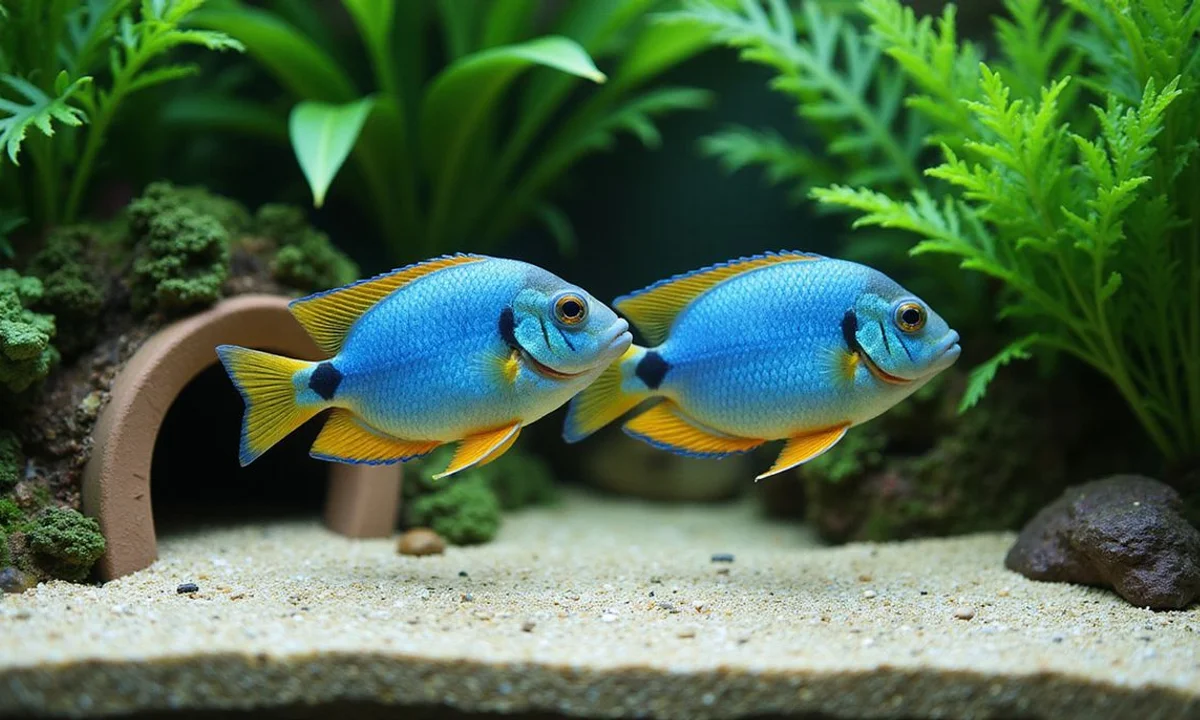
- Dwarf cichlids: Apistogrammas, German Blue Rams, Bolivian Rams, and Kribensis stay small at 3 to 4 inches. These peaceful fish offer vibrant colors and work beautifully in community setups.
Specialist cichlids (Tanganyika, Discus)
Specialist cichlids demand strict attention to water parameters and are best suited for experienced keepers. Tanganyikans include stunning but specific species like Julidochromis, Tropheus, and shell-dwellers.
Our team highly recommends the Neolamprologus multifasciatus for smaller setups. This tiny shell-dweller thrives in a 20-gallon tank filled with escargot shells.
Discus remain the undisputed kings of the freshwater hobby, but they require a serious commitment to soft water, temperatures between 82 and 86 degrees Fahrenheit, and frequent water changes.
African Mbuna setup
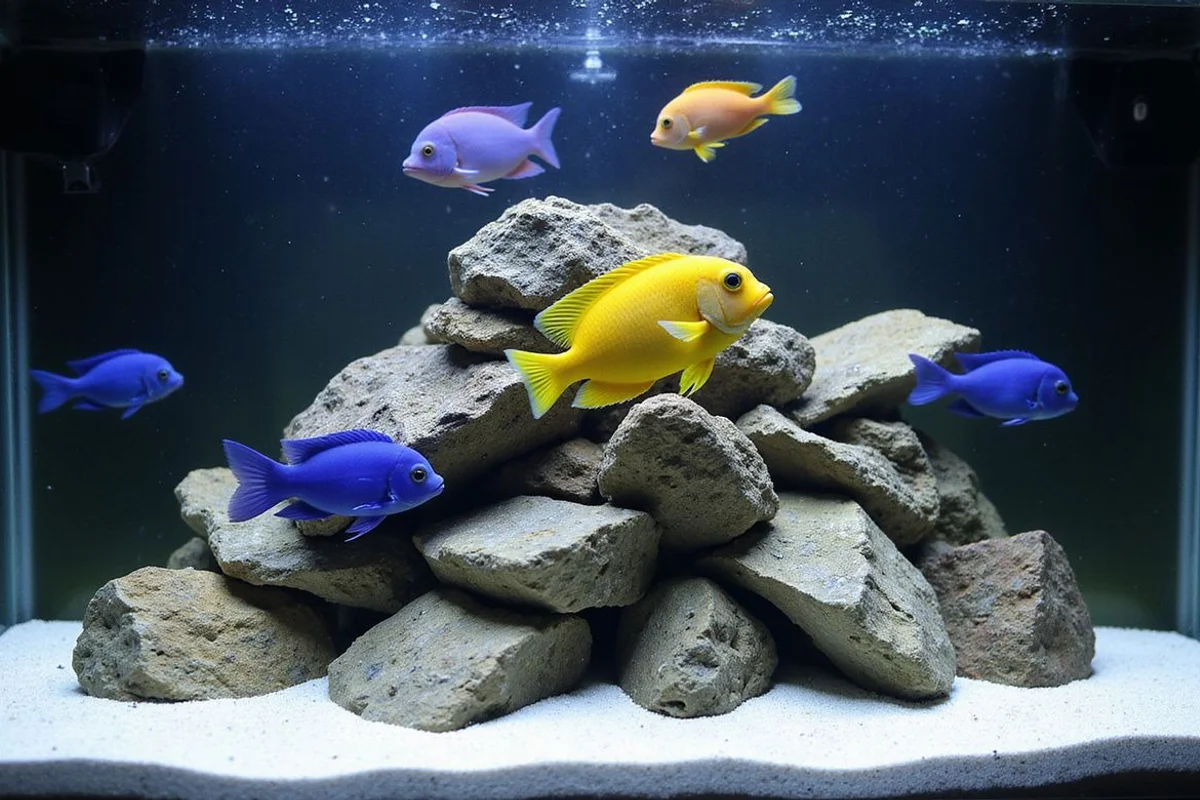
A proper African Mbuna setup requires heavy filtration, hard water, and abundant rockwork. This is the most popular African cichlid category due to their bright colors and highly active behavior.
- Tank: 55 to 75 gallons minimum. Rectangular footprints provide more swimming space than tall tanks.
- Filter: Oversized filtration is mandatory. African cichlids produce a massive bioload. We recommend a heavy-duty canister filter, like the Fluval FX6, rated for two to three times your actual tank volume.
- Water: Aim for a pH of 7.8 to 8.6 with high hardness. Sarasota tap water is typically suitable without major adjustments, but you should still bring a water sample to verify your exact numbers.
- Hardscape: Build tall piles of slate, holey rock, or lava rock. Create multiple caves and visual breaks to establish territories. Aragonite sand is the ideal substrate because it naturally buffers the water pH up to 8.2.
- Stocking: Deliberate overstocking is the secret to success. A 75-gallon Mbuna tank needs about 15 to 25 fish to spread out the aggression safely, keeping a ratio of three females to every one male.
- Common species: Yellow Lab (Labidochromis caeruleus), Demasoni, Acei, Red Zebra, Saulosi, and Rusty cichlids.
Dwarf cichlid setup
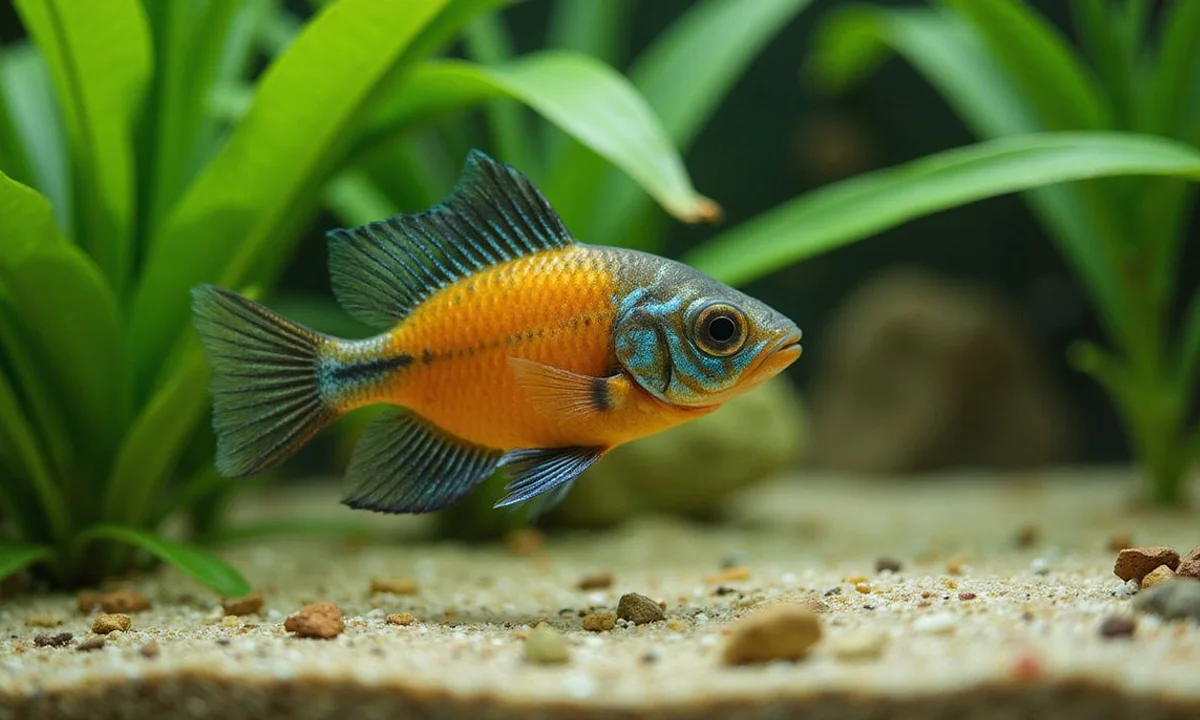
Dwarf cichlids serve as the perfect bridge between peaceful community tanks and aggressive cichlid keeping. These colorful fish stay small and thrive in carefully planted community setups.
- Tank: 20 to 30 gallons is the absolute minimum.
- Water: Chemistry depends entirely on the specific species. Apistogramma cacatuoides (Cockatoo cichlids) and German Blue Rams prefer soft, acidic water sitting at a pH of 6.5 to 7.0 and temperatures around 72 to 82 degrees Fahrenheit. Bolivian Rams and Kribensis tolerate harder, alkaline water perfectly fine.
- Hardscape: Heavily planted tanks with caves and broken sight lines work best. Apistogrammas require enclosed caves for breeding. We suggest using fine sand as a substrate to protect their sensitive gills while they sift for food.
- Tankmates: Peaceful schooling fish make excellent companions. Avoid mixing two different dwarf cichlid species unless your tank is exceptionally large.
- Common species: Apistogramma cacatuoides, A. agassizii, A. borellii, German Blue Rams (Mikrogeophagus ramirezi), Bolivian Rams (M. altispinosus), and Kribensis (Pelvicachromis pulcher).
Aggression management
Managing aggression requires a specific strategy based on your exact cichlid category. There are three proven approaches to keeping the peace in your aquarium.
Overstocking (Mbuna)
More fish means less individual territory to claim. This counter-intuitive strategy diffuses fighting across the whole colony. A 75-gallon Mbuna tank with only 8 fish will experience severe aggression. The exact same tank stocked with 20 fish forces the dominant male to spread his attention, preventing any single fish from being bullied to death.
Pair/group dynamics (Central/South American)
Many American cichlids form bonded pairs that defend a specific territory together. A bonded angelfish pair will hold down a corner of the tank peacefully. Two random adult angelfish thrown together will often fight relentlessly. Our best trick is to buy a group of six juveniles. Letting a natural pair form as they mature guarantees a much higher success rate before rehoming the rest.
Mixed-species community (Dwarfs)
Dwarf cichlids integrate beautifully alongside peaceful schooling species. One pair of dwarf cichlids in a 30-gallon planted tank with tetras and corydoras creates a classic, active display. Adding “dither fish” like Cardinal Tetras actually makes shy dwarf cichlids feel secure enough to come out of hiding.
GCA’s typical cichlid stock
High-quality nutrition prevents common health issues in these active fish. Our store maintains a steady rotation of healthy, quarantined cichlids and premium supplies. Premium diets like NorthFin Cichlid Formula and New Life Spectrum ensure optimal coloration and digestion.
Here is what you will usually find in our tanks:
- Africans: Yellow Labs, Demasoni, Acei, and Red Zebra (Mbuna mix). Occasional Peacocks make an appearance.
- Dwarfs: German Blue Rams, Bolivian Rams, Kribensis, and Apistogramma when available.
- South American: Occasional angelfish, severums, and Geophagus.
- Central American: Occasional Convicts and Firemouths.
Specialist fish like Tropheus, Discus, or named Apistogramma varieties usually arrive via special order. Our team can chase down most named lines through wholesalers within one to three weeks. You just need to let the front desk know what you are looking for.
Questions to ask before buying
Asking the right questions prevents deadly stocking mistakes down the road. You must plan for the adult size and temperament of every single fish.
- What is the adult size? Convicts stop at 6 inches while Oscars push 14 inches. Always plan your tank for the adult fish.
- What is the temperament toward tankmates? Consider the specific species you already have swimming at home.
- What is the water chemistry preference? Match the fish to your tap water or prepare to chemically adjust it during every water change.
- What is the minimum tank size? Demand an honest answer instead of the old myth that fish only grow to the size of their tank.
- Can I sex this fish at this age? Some species display physical differences as juveniles. Others remain impossible to sex until full maturity.
- What are the specific dietary needs? African Mbuna are herbivores and will develop deadly “Malawi bloat” if fed high-protein meaty foods meant for carnivores.
Planning a cichlid tank
Cichlid tanks demand significantly more upfront planning than standard community setups. The consequences of bad stocking choices are immediate and severe.
Planning ahead saves money, prevents fish loss, and guarantees a stable aquarium environment from day one.
Start by verifying your local water parameters. Testing for General Hardness (GH) and Carbonate Hardness (KH) is just as important as checking the pH. Bring your tank dimensions, a water sample for free testing, and a rough idea of the cichlid category you want to keep.
We will work through specific species options, hardware requirements, and aggression management strategies. The consultation is completely free. Visit the store Mon-Sat 10-6 or Sun 12-5.
Frequently Asked Questions
Can I keep cichlids with community fish?
Most can't. Dwarf cichlids (apistogrammas, German Blue Rams, kribensis) are exceptions and can work in peaceful planted community tanks. Most other cichlids belong in species-only tanks.
What tank size for African cichlids?
55 gallons is a realistic minimum for a small Mbuna group. 75+ is much better long-term. Africans need rockwork, hard alkaline water, and overstocking (yes, deliberately) to manage aggression.
Are German Blue Rams good beginner cichlids?
Yes if your water is soft, warm and stable. German Blue Rams need 80-82°F and dislike hard water. Bolivian Rams are a hardier alternative for typical Sarasota tap water.