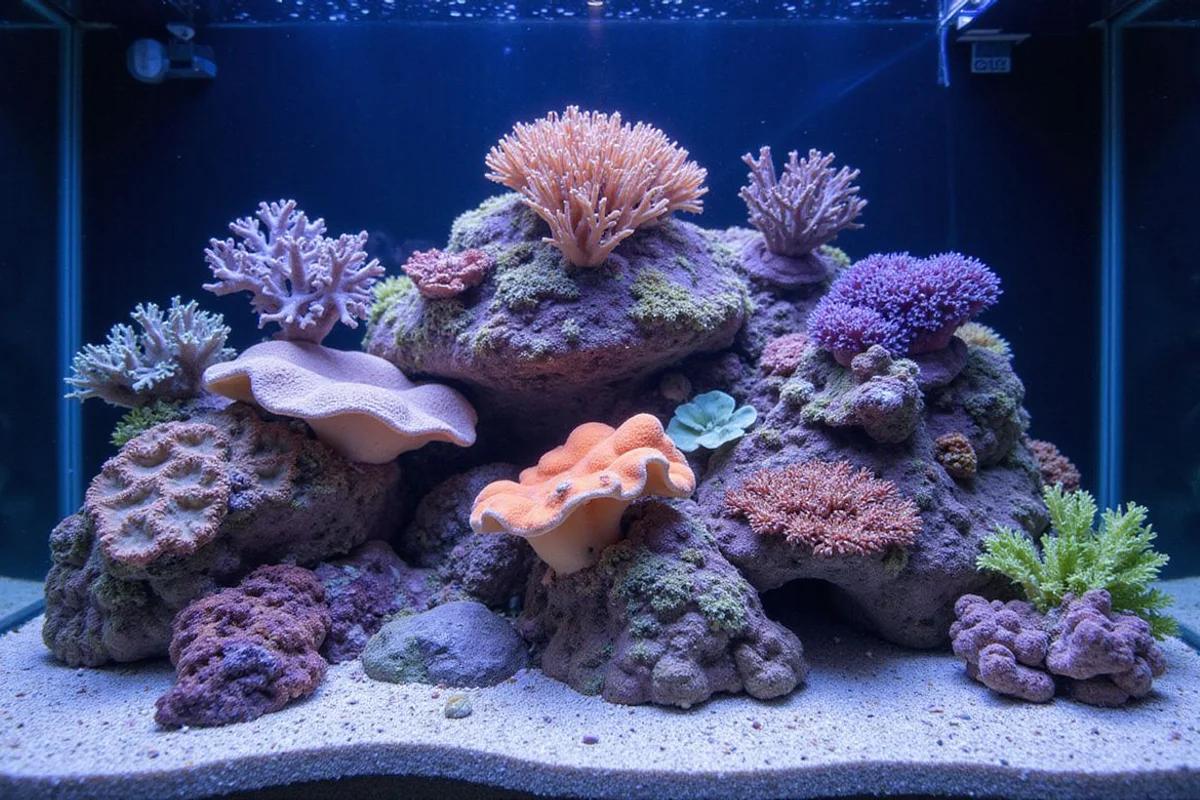
We see the same scenario play out every week with new aquarium owners. Excitement takes over, and suddenly a delicate, advanced coral ends up in a tank that simply isn’t ready for it.
That rush often leads to frustration and lost investments. Our goal is to help you avoid those hard lessons by understanding exactly how corals are grouped by skeleton type, lighting needs, and overall coral difficulty.
You will discover the exact differences between these three major families, getting all coral types explained so you can make informed decisions.
Let’s break down what to start with, what to add as your system matures, and what to avoid until your water parameters are rock solid.
Soft Corals (Softies)
We always recommend soft corals, affectionately known as softies, as the absolute best starting point for any new reef. These species lack a hard calcium carbonate skeleton. Their structure relies entirely on internal water pressure and tiny calcium spicules embedded in their fleshy tissue. This unique biology makes them incredibly resilient to the normal water parameter swings found in newer systems.
Here are the essential facts about soft corals:
- Common types: Zoanthids, palys, mushrooms (Rhodactis, Ricordea, Discosoma), leathers (toadstool, finger, devil’s hand), green star polyps (GSP), xenia, and kenya tree.
- Lighting and Flow: Most tolerate a wide range of conditions, thriving in low to moderate light (50 to 200 PAR). They prefer sweeping, random water movement rather than a direct, laminar blast from a pump.
- Difficulty and Growth: These are the easiest corals to keep alive. Growth rates vary widely, with zoanthids spreading moderately, while GSP and xenia can aggressively cover your rockwork.
Many softies release chemical defense compounds into the water that can stunt the growth of other species. You must run high-quality carbon filtration in mixed reef setups to neutralize this allelopathy.
Our current pricing data for 2026 shows that beginner soft coral frags average around $40 in the US market, making them a highly cost-effective way to add color. Homeowners and business owners love these varieties because they deliver beautiful motion without requiring daily chemical dosing. Wait until your tank is at least three months old and past the initial diatom algae blooms before introducing your first softie.
LPS (Large Polyp Stony)
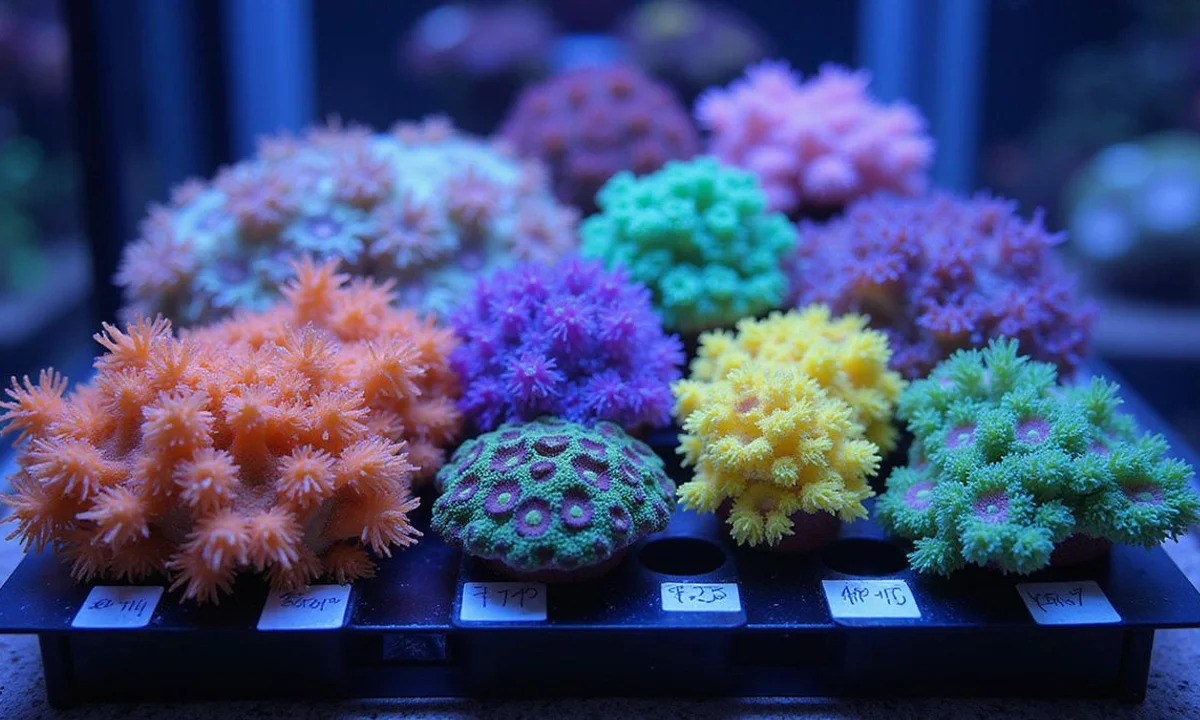
Our team considers Large Polyp Stony corals to be the perfect bridge between easy softies and highly demanding SPS varieties. These stoney species build a rigid calcium carbonate skeleton but feature large, fleshy polyps. The polyps often inflate to several times the size of the underlying skeleton during feeding or daylight hours.
You will find a stunning variety of shapes and colors in this family:
- Common types: Hammer, torch, and frogspawn (Euphyllia), candy cane (Caulastrea), acan (Acanthastrea, Micromussa), scolymia, blastomussa, favia, and lobophyllia.
- Lighting: They require moderate intensity, typically 100 to 200 PAR, which is easily achievable with modern US LED fixtures like the AI Prime or EcoTech Radion. Some species, like Acanthastrea, actually prefer the lower end of that spectrum.
- Flow: Gentle, indirect flow is mandatory. Direct blasting currents will easily strip the delicate flesh right off their sharp skeletons.
- Difficulty: LPS corals are moderately difficult, requiring more stable water chemistry than softies but offering more forgiveness than advanced SPS.
Growth patterns vary, with Euphyllia branching outward and acans forming encrusting plates over your rocks. Most LPS corals show explosive growth when target-fed one or two times per week. Popular choices like frozen mysis shrimp or powdered foods like Reef Roids trigger incredible feeding responses.
We advise extreme caution when placing Euphyllia species near other tank inhabitants. Hammers and torches deploy long sweeper tentacles loaded with potent stinging cells. You need to leave at least four to six inches of clearance around them to prevent them from burning neighboring corals.
SPS (Small Polyp Stony)
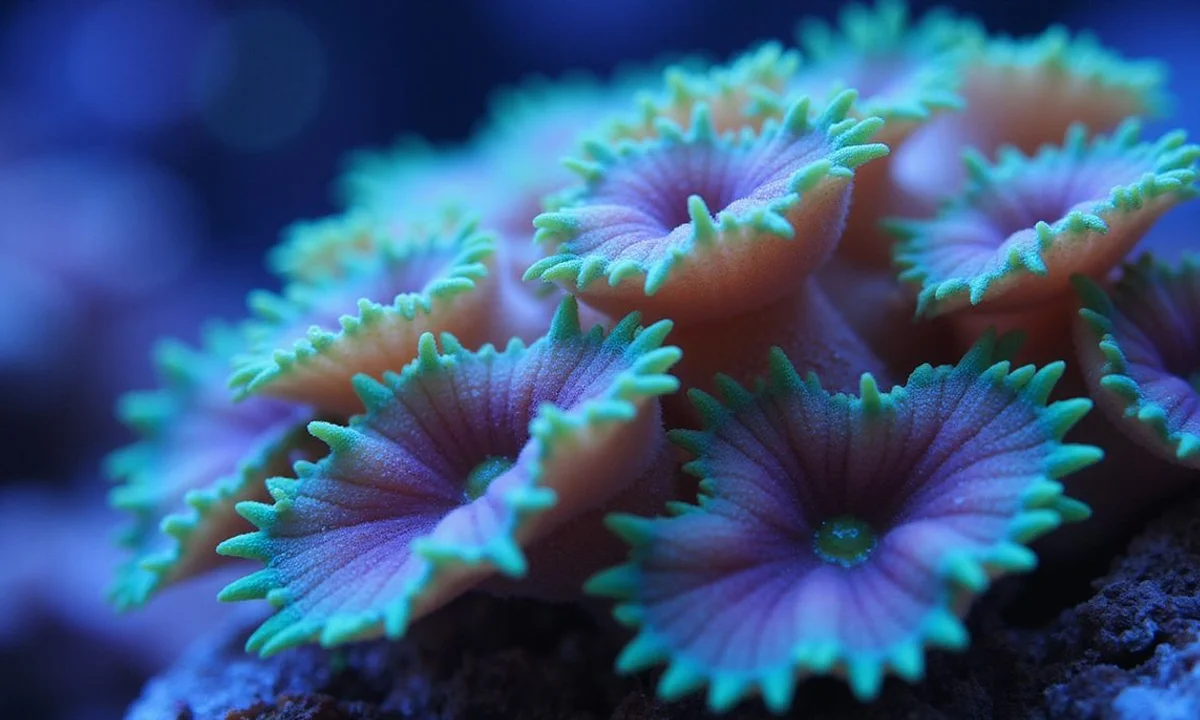
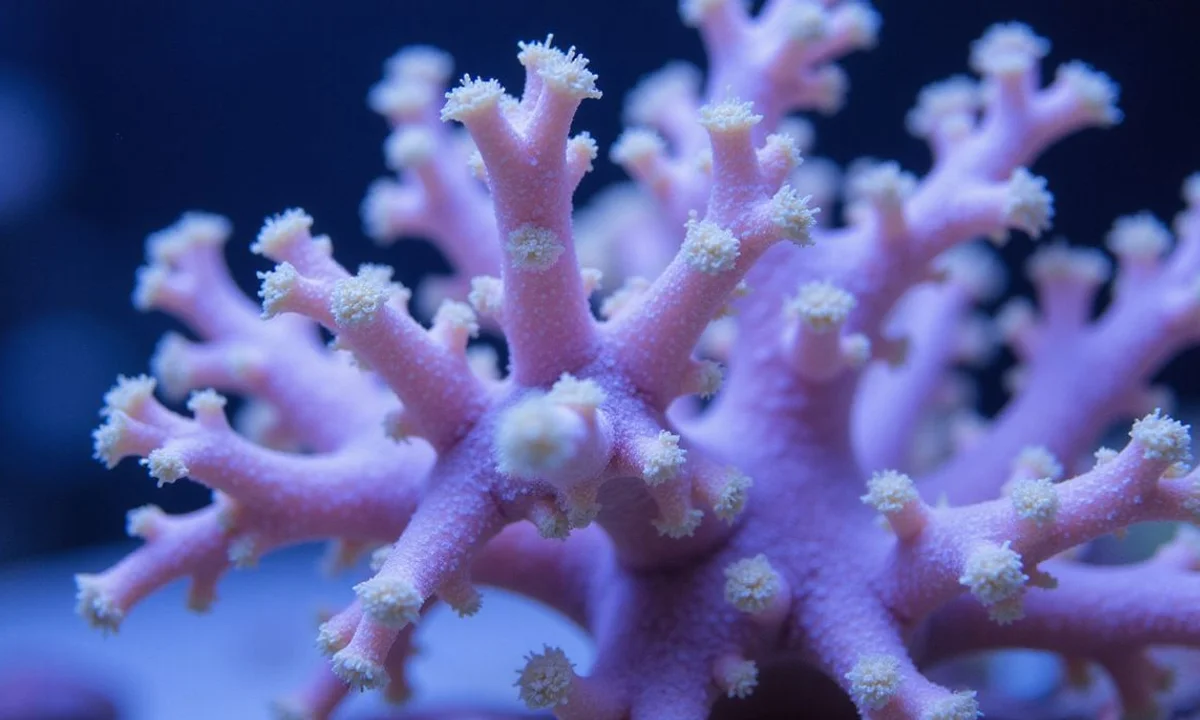
We reserve Small Polyp Stony corals strictly for mature aquariums with impeccable water quality. These are the crown jewels of the reef keeping hobby, featuring dense calcium carbonate skeletons covered in thousands of tiny, tightly packed polyps. They typically grow into intricate branching, encrusting, or broad plating formations.
If you are setting up a display tank for a commercial business or a high-end home office, SPS corals provide that iconic, natural reef look:
- Common types: Acropora (the genus most people think of when they say “SPS”), montipora (cap, digi, plating), birdsnest (Seriatopora), pocillopora, and stylophora.
- Lighting: These demanding corals require intense, reef-spec spectrum lighting producing 150 to 400+ PAR.
- Flow: Strong, chaotic, and random water movement is absolutely essential. The current must be powerful enough to blow detritus out from between their dense branches.
- Difficulty: This is an advanced category, and failures almost always stem from placing them in systems that lack chemical stability.
Parameter stability is the single most critical factor for success. SPS corals serve as the canary in the coal mine for your reef tank. Rapid tissue necrosis (RTN) caused by sudden alkalinity swings is the number one killer of Acropora. Slow tissue necrosis (STN) usually indicates a long-term drift in your baseline parameters.
Our service technicians rely on digital testers like the Hanna HI772 Alkalinity Checker to maintain dKH values with pinpoint precision. You simply cannot eyeball alkalinity or rely on cheap color-changing test kits when housing these sensitive animals. Building an advanced SPS system is a serious investment, with 2026 industry estimates placing a fully equipped 100-gallon SPS setup at $8,000 or more.
Comparison table: soft vs lps vs sps corals
Reviewing a side-by-side breakdown helps clarify exactly what each coral group demands. This quick reference guide highlights the major operational differences between the three main families.
| Feature | Soft Corals | LPS Corals | SPS Corals |
|---|---|---|---|
| Skeleton Type | None (fleshy tissue) | Calcium, large fleshy polyps | Calcium, small tight polyps |
| Lighting (PAR) | Low to moderate (50-200) | Moderate (100-200) | Moderate to high (150-400+) |
| Flow Needs | Low to moderate (sweeping) | Low to moderate (indirect) | Moderate to high (chaotic) |
| Difficulty | Easy (beginner friendly) | Moderate (intermediate) | Advanced (expert only) |
| Minimum Tank Age | 3 months | 4 to 6 months | 6 to 12 months |
| Parameter Tolerance | Wide (very forgiving) | Moderate (needs stability) | Narrow (requires precision) |
| Feeding Strategy | Mostly photosynthesis | Photosynthesis + target feeding | Mostly photosynthesis |
| Neighbor Clearance | 1 to 2 inches | 4 to 6 inches (sweeper risk) | 2 to 3 inches |
Beginner-to-advanced progression
We strongly suggest following a phased timeline to guarantee the highest survival rate for your livestock. Rushing the biological maturation of a saltwater aquarium is the fastest way to waste money. The math heavily favors patience.
Here is the typical reef tank stocking progression we recommend at Gulf Coast Aquatics for new system builds.
Months 3 to 6: Establishing the Foundation
Your tank has finally passed the ugly algae phase and parameters are steady. This is the time to add zoanthids, mushrooms, and green star polyps. These easy softies help establish your tank’s first wins while teaching you basic maintenance routines.
Months 6 to 9: Adding Texture and Motion
Your biological filtration is much stronger now. You can safely introduce leathers, kenya trees, and high-color zoanthid morphs. This is also the ideal window to test your skills with a single hammer or frogspawn as your entry into the LPS world.
Months 9 to 12: The LPS Expansion
Your water chemistry routines are dialed in. Now you can confidently add more demanding LPS corals, including colorful torches, candy canes, and acans. You might also try a single, hardy SPS frag like a birdsnest or a montipora cap to test your system’s stability.
Year 1 and Beyond: The Advanced Reef
Your parameters have remained rock-solid for over six months without major fluctuations. You are finally ready to introduce delicate Acropora species and high-end SPS corals. Skipping ahead to this stage early sometimes works, but it usually results in an expensive crash.
GCA stocking ranges
Our facility maintains a massive, rotating inventory of healthy, aquacultured livestock ready for your display. Whether you are outfitting a small desktop nano tank or a massive commercial lobby aquarium, we have options that fit your specific skill level.
Most weeks, you will find these categories fully stocked:
- Softies: Zoanthid frags, mushrooms in multiple colors, GSP, kenya tree, xenia, and various leather frags.
- LPS: Hammers and torches in multiple rare morphs, frogspawn, candy canes, acans, and blastomussa.
- SPS: Montipora (cap, digi, plating), birdsnest, and named Acropora whenever available.
Special orders for highly specific morphs are routine for our staff. We typically fulfill these requests in one to three weeks through our trusted US wholesalers.
For your first coral additions, review our guide to the best beginner corals to plan your initial purchases. Understanding soft vs lps vs sps corals is the first step toward a thriving reef. We always encourage local customers to bring in a water sample for free in-store testing before taking anything home. Let our team verify your parameters so you can buy with total confidence.
Frequently Asked Questions
Can I mix all three in one tank?
Yes. Most mixed reefs combine softies, LPS and SPS. Just plan placement and parameters around the most demanding pieces — usually the SPS — and use carbon to manage allelopathy between soft corals and SPS.
Which grows fastest?
GSP and xenia (softies) can take over a tank in months. Acropora SPS grow steadily over years. Most LPS sit between the two.
Are SPS really that hard?
They need stable parameters and good light/flow, but with a mature stable tank they're not as scary as the internet suggests. Most failures come from buying SPS for tanks under 6 months old.